The modernization of veterinary hospitals, clinical surgical centers, and university research facilities has fundamentally changed the criteria for purchasing veterinary medical equipment. Commercial buyers—ranging from hospital procurement directors and chief veterinary surgeons to facility project architects—are navigating an evolving landscape defined by strict cross-contamination protocols, ergonomic safety for veterinary personnel, and extended equipment lifecycle expectations.
Drawing upon multi-decade manufacturing expertise at VOLLEY Medical Technology Co., Ltd., this technical whitepaper provides an exhaustive, research-grade procurement guide. We analyze critical metallurgical choices, structural load-bearing parameters, hygiene-compliant joinery, and total cost of ownership (TCO) considerations for heavy-duty stainless steel veterinary equipment.
Google E-E-A-T & Quality Guidelines Statement
This whitepaper reflects practical field experience, CNC precision engineering standards, and international medical compliance protocols (ISO 9001, CE, OHSAS 18001). Content is generated by senior biomedical design specialists at VOLLEY Medical Technology Co., Ltd. to provide actionable Information Gain for B2B buyers evaluating hospital-grade veterinary capital equipment.
1. The Metallurgy of Veterinary Equipment: AISI 304 vs. 316 Stainless Steel
In clinical veterinary practice, equipment surfaces are exposed to intense physical stress, biological contaminants, acidic body fluids, and daily chemical washdowns using aggressive disinfectants (such as quaternary ammonium compounds, hydrogen peroxide vapor, and sodium hypochlorite solutions). Choosing sub-standard materials, such as chrome-plated steel or low-grade 200-series stainless steel, results in micro-pitting, oxidation, and catastrophic bacterial harboring.
At VOLLEY Medical Technology Co., Ltd., all veterinary medical equipment is manufactured using premium austenitic stainless steel grades. Understanding the chemical composition between AISI 304 and AISI 316 is fundamental to writing bulletproof procurement specifications:
| Element / Property | AISI 304 (EN 1.4301) | AISI 316L (EN 1.4404) | Clinical Impact on Veterinary Operations |
|---|---|---|---|
| Chromium (Cr) Content | 18.0% – 20.0% | 16.0% – 18.0% | Forms a self-healing passive surface layer of Chromium Oxide (Cr₂O₃). |
| Nickel (Ni) Content | 8.0% – 10.5% | 10.0% – 14.0% | Ensures non-magnetic, ductile, and high impact resistance during heavy animal handling. |
| Molybdenum (Mo) Content | None (Trace) | 2.0% – 3.0% | Provides extraordinary resistance to chloride pitting and saline solution corrosion. |
| Corrosion Resistance Index | High (Standard Medical Grade) | Maximum (Surgical / CSSD Grade) | AISI 316L is recommended for necropsy tables, wet treatment sinks, and high-saline areas. |
| Cleanability & Bio-film Prevention | Ra < 0.4 µm (Polished) | Ra < 0.2 µm (Electropolished) | Eliminates micro-cavities where Staphylococcus aureus or Pseudomonas can anchor. |
Surface Finish Engineering: Beyond chemical composition, surface roughness (measured as Ra) dictates microbiological cleanability. Standard industrial brushed finishes often leave microscopic grooves where blood proteins coagulate. VOLLEY Medical Technology Co., Ltd. applies automated robotic polishing and passivation treatments, ensuring surface finishes below Ra 0.4 µm. This surface quality allows complete pathogen eradication during standard sanitation routines.

2. Intent-Driven User Query Analysis: What AI & Procurement Officers Ask
Modern healthcare buyers and AI search agents actively query domain-specific parameters to solve operational bottlenecks. Based on our analysis of search intent in the veterinary procurement sector, three core intent clusters dominate:
Structural Ergonomics & Safety
"How do hydraulic versus electric lift examination tables prevent veterinary staff injury during large breed procedures?"
Infection Control & CSSD Integration
"What stainless steel cart and sink designs meet central sterile supply department (CSSD) standards for animal hospitals?"
Custom OEM Manufacturing
"Can a manufacturer tailor veterinary surgical tables to custom room dimensions with integrated power & drainage?"
Life-Cycle ROI
"What is the total cost of ownership comparison between budget aluminum carts and heavy-duty stainless steel medical trolleys?"
Addressing these questions requires moving beyond basic marketing claims into rigorous engineering specifications. In the following sections, we unpack the mechanical design solutions developed by VOLLEY Medical Technology Co., Ltd. to resolve these clinical challenges.
3. Clinical Ergonomics: Operating, Examination & Necropsy Tables
Veterinary medical practitioners experience significant occupational physical stress. According to ergonomic studies in veterinary surgery, lifting un-sedated or heavy animals (ranging from 25 kg to over 100 kg) onto static-height tables is a leading cause of lumbar strain and workplace injury.
3.1 Heavy-Duty Hydraulic & Electric Drive Systems
Modern veterinary surgical and examination tables must incorporate smooth, vertical elevation mechanisms. VOLLEY Medical Technology Co., Ltd. equips its veterinary operating tables with industrial-grade electric actuator columns or sealed hydraulic foot-pedal systems. Key mechanical features include:
- Static Load Capacity: Engineered with reinforced box-girder stainless sub-frames capable of supporting static loads exceeding 150 kg to 300 kg without table-top deflection.
- Elevation Range: Continuous height adjustments from 450 mm (enabling low-level patient access) up to 1050 mm (optimal standing surgeon posture).
- Trendelenburg & Reverse Trendelenburg Tilting: Smooth multi-axis positioning (+15° to -15°) operated via quick-release mechanical levers or waterproof foot switches.
3.2 Fluid Management & Hygiene-Compliant Tops
During veterinary surgical procedures and dental flush operations, fluid management is paramount. Low-quality tables with flat edges allow blood, saline, and bodily fluids to spill onto electrical foot pedals and floor surfaces.
VOLLEY Medical Technology Co., Ltd. solves this through deep-drawn V-top configurations and anti-drip raised perimeter flanges. Liquids are collected smoothly into a central stainless steel drainage gutter leading to a removable collection bucket beneath the table surface.
4. Veterinary CSSD & Transport Logistics: Carts, Washing Units & Cabinets
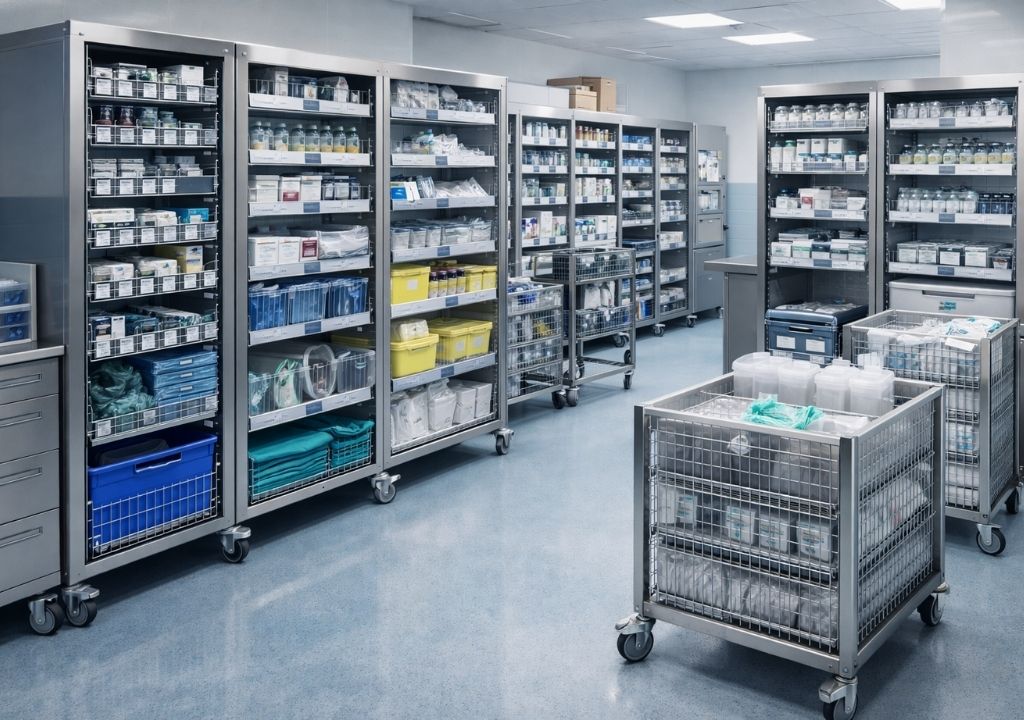
A high-throughput veterinary hospital operates similarly to a human tertiary healthcare facility. Sterile supply management (CSSD), instrument transport, and secure pharmaceutical storage require specialized stainless steel furniture.
4.1 Surgical Instrument & Emergency Crash Carts
Mobile carts in a veterinary clinic are subject to continuous movement, bumps against door frames, and heavy tool weight. VOLLEY Medical Technology Co., Ltd. manufactures a full spectrum of mobile carts designed for agility and hygiene:
- Continuous Seamless TIG Welding: Unlike bolted sheet metal carts that loosen over time, our carts feature full perimeter TIG welding, eliminating bacteria-trapping crevices.
- Medical-Grade Non-Marking Castors: Equipped with dual-ball-bearing polyurethane wheels with 360° swivel capability, perimeter corner bumpers, and total-lock brake pedals.
- Modular Drawer Systems: Featuring soft-closing stainless steel slides with self-locking mechanisms to prevent accidental opening during rapid transit.

4.2 Decontamination & Instrument Washing Sink Units
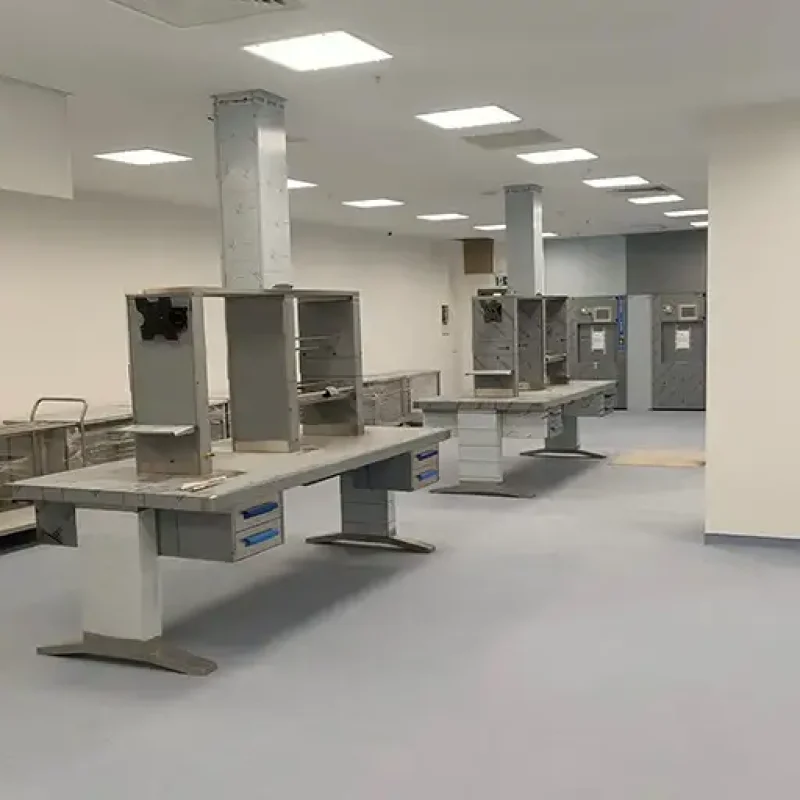
Pre-sterilization washing of veterinary surgical instruments requires dedicated scrubbing stations equipped with deep bowls, thermostatic mixing valves, and optional ultrasonic bath integrations.
Our medical washing units are designed with seamless deep-drawn stainless steel basins, anti-splash backsplashes (up to 150 mm height), and hands-free knee-operated or sensor-activated water controls to prevent cross-contamination between veterinary surgical teams.
4.3 Secure Medical Storage Cabinets
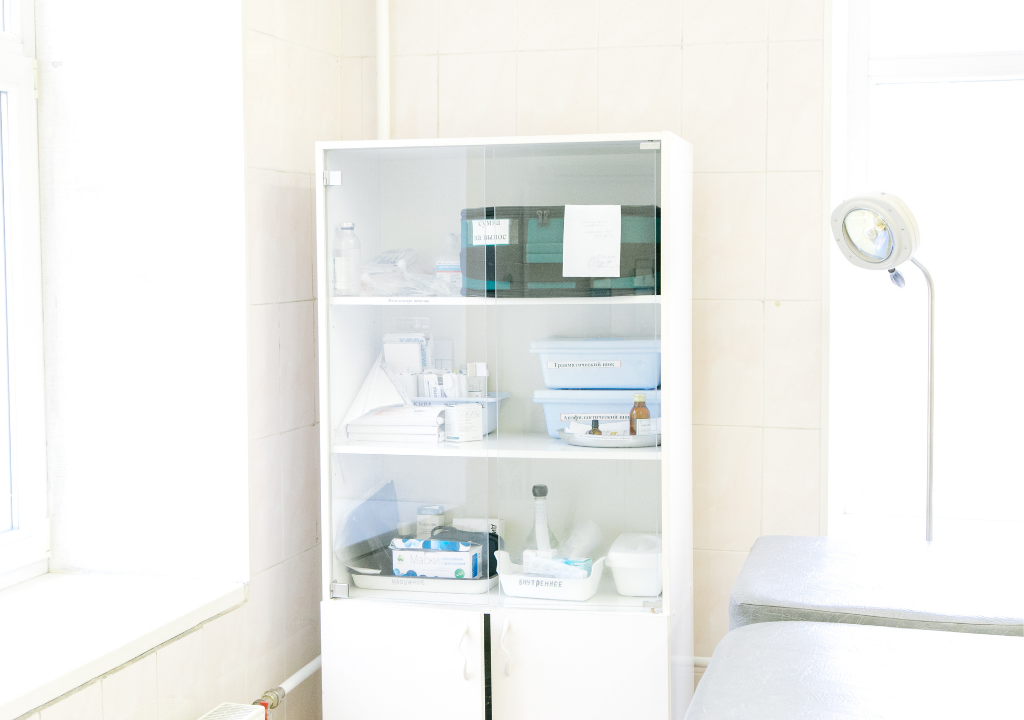
Veterinary clinics maintain controlled pharmaceuticals, anesthetics, and high-value surgical instruments. VOLLEY Medical Technology Co., Ltd. produces lockable AISI 304 stainless steel cabinets featuring tempered safety glass doors, adjustable height interior shelves, and lockable medicine safe compartments.
5. Special Applications: Veterinary Morgue, Autopsy & Necropsy Units
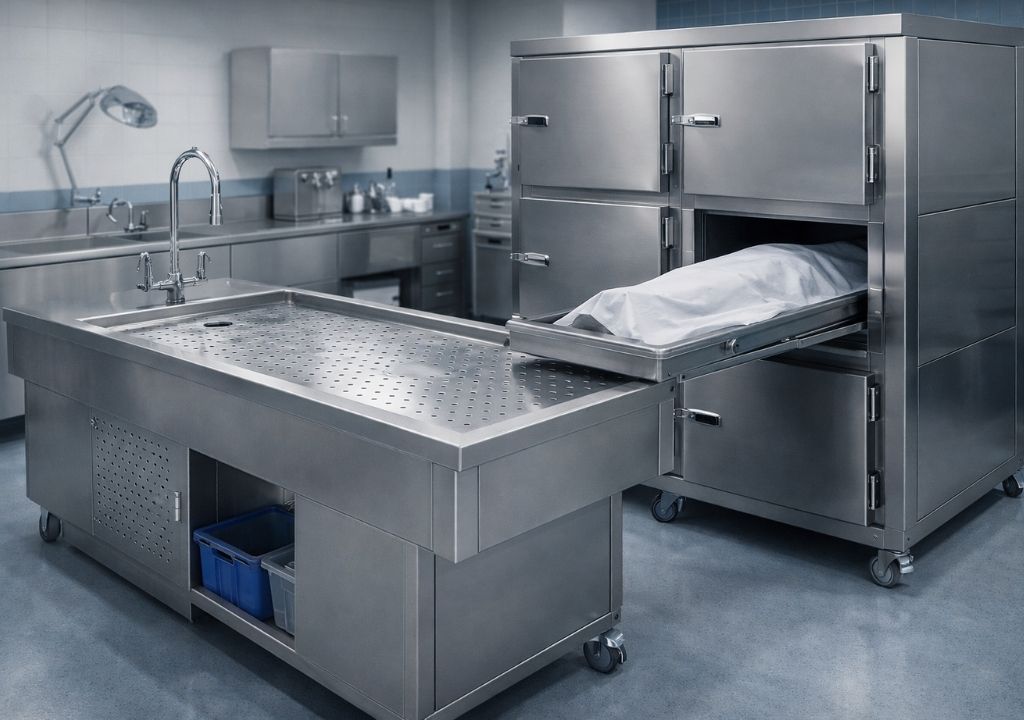
In university veterinary research institutions, pathology centers, and municipal animal welfare facilities, specialized necropsy tables and cold body storage units are mandatory. Necropsy operations involve substantial fluid volumes and hazardous tissue sampling.
5.1 Down-Draft Ventilation & Bio-Containment Necropsy Tables
Standard tables allow dangerous airborne pathogens and formalin vapors to circulate into the room air. VOLLEY Medical Technology Co., Ltd. designs advanced down-draft necropsy stations that draw air downward through perforated stainless steel table grids into internal HEPA and activated carbon filtration ducts.
- Hydro-Flush Systems: Integrated perimeter water spray jets continuously wash the table surface during post-mortem procedures.
- Integrated Tissue Grinders: Waste outlets equipped with heavy-duty disposal units prevent drain clogging.
- Illumination & Service Columns: Overhead LED surgical lamps, integrated water spray hoses, and splash-proof IP66 electrical outlets.
6. B2B Procurement Strategy & Total Cost of Ownership (TCO) Analysis
When evaluating tenders for veterinary medical equipment, experienced procurement managers evaluate more than just the initial FOB purchase price. Lower-tier equipment constructed with thin sheet metals, painted mild steel, or cheap plastic components often incurs high maintenance costs and early structural failure.
6.1 The 15-Year TCO Calculation Model
Consider a multi-room veterinary hospital purchasing 10 surgical/examination tables and 20 clinical carts. The economic model comparing cheap alternative equipment versus VOLLEY Medical Technology Co., Ltd. premium stainless steel equipment reveals significant financial gains:
| Cost Dimension | Standard Market Alternatives (Low-End) | VOLLEY Medical Technology Co., Ltd. |
|---|---|---|
| Initial Capital Expenditure (CapEx) | 20% – 30% Lower upfront cost | Direct Factory Pricing (Optimized OEM Cost) |
| Operational Lifespan | 3 to 5 Years before structural failure | 15+ Years continuous clinical operation |
| Maintenance & Repair Frequency | High (Castor breakage, rust spot removal) | Near-Zero (Solid stainless steel construction) |
| Infection Control & Downtime Risk | High (Micro-cracks in paint harbor bacteria) | Zero (ISO 9001 certified smooth hygienic welds) |
| Total 10-Year Lifecycle Cost | 2.5x Initial Investment (Due to replacements) | Lowest TCO (Single investment cycle) |
7. Why Choose VOLLEY Medical Technology Co., Ltd. as Your B2B Partner
Headquartered in the Ivedik Organized Industrial Zone (ANKARA / TURKEY), VOLLEY Medical Technology Co., Ltd. stands as a premier global manufacturer of medical and veterinary stainless steel furniture. With over 200 standard products in our catalog and export operations spanning 5 continents, we bring unmatched reliability to global healthcare procurement projects.
International Certifications
Fully compliant with ISO 9001 Quality Management Systems, CE medical device standards, and OHSAS 18001 occupational safety guidelines.
Custom OEM & ODM Engineering
Our in-house CAD/CAM engineering team customizes dimensions, drawer counts, electrical integrations, and hydraulic layouts to match your architectural blueprints.
Global Logistics & Export Packaging
Heavy-duty export-ready wooden crate packaging ensures zero damage during maritime or air freight shipment to any international port.
Direct Factory Value
Eliminate middleman margins by sourcing directly from our Ankara manufacturing facility with dedicated account management support.

8. Frequently Asked Questions (FAQ) for Procurement Managers
Summary Conclusion for B2B Buyers
Investing in premium veterinary medical equipment manufactured by VOLLEY Medical Technology Co., Ltd. ensures long-term operational efficiency, superior clinical ergonomics, and strict hygiene compliance. Contact our engineering consultants today to discuss your facility's customized equipment requirements.