1. Executive Procurement Summary: The Strategic Shift in Hospital Trolley Selection
Healthcare facilities operate under stringent microbiological control parameters and continuous mechanical stress. Within high-acuity environments such as Operating Rooms (OR), Central Sterile Supply Departments (CSSD), and Intensive Care Units (ICU), mobile equipment represents both a critical operational asset and a primary vector for cross-contamination if improperly designed.
Historically, hospital procurement departments often evaluated mobile carts strictly as secondary utility items, frequently selecting low-cost painted mild steel, ABS plastic, or hybrid aluminum models. However, longitudinal clinical data demonstrates that non-monolithic cart materials suffer high failure rates due to chemical degradation from sporicidal disinfectants, joint looseness, bacterial harboring in plastic seams, and structural deformation under dynamic loads.
B2B Information Gain Insight
Modern hospital engineering protocols require monolithic stainless steel medical carts manufactured from certified AISI 304 or AISI 316 grade alloys. Investing in precision-engineered stainless steel carts reduces 10-year Total Cost of Ownership (TCO) by up to 42% compared to polymer or painted metal alternatives, primarily through zero surface degradation, reduced downtime, and seamless automated thermal disinfection compatibility.
At VOLLEY Medical Technology Co., Ltd., based in Ankara, Turkey, our engineering directorate designs and manufactures over 200 ISO-certified stainless steel medical furniture solutions exported across 5 continents. This whitepaper establishes the authoritative technical specifications, metallurgical benchmarks, and ergonomic standards required for purchasing high-performance stainless steel medical carts.
2. Metallurgy & Material Selection: AISI 304 vs. AISI 316L Analysis
The corrosion resistance, mechanical strength, and hygienic performance of a medical cart are fundamentally dictated by the chemical composition of its base alloy. Not all stainless steel carts are engineered equally; selecting the inappropriate alloy grade for specific hospital departments leads to premature surface pitting, stress corrosion cracking, and irreversible disinfectant staining.

2.1 Chemical Composition & Pitting Resistance Equivalent Number (PREN)
Austenitic stainless steels—specifically AISI 304 (EN 1.4301) and AISI 316 / 316L (EN 1.4404)—are the industry gold standard for medical furniture. The addition of Chromium forms a self-healing chromium oxide ($Cr_2O_3$) passive film across the surface. However, exposure to harsh hospital sterilants containing chloride ions (such as sodium hypochlorite) or acidic agents requires precise alloy selection.
| Metallurgical Parameter | AISI 304 (Standard Clinical) | AISI 316L (High Chemical/Moisture) | Impact on Clinical Application |
|---|---|---|---|
| Chromium (Cr) % | 17.5% - 19.5% | 16.0% - 18.0% | Establishes primary passive layer against oxidation. |
| Nickel (Ni) % | 8.0% - 10.5% | 10.0% - 14.0% | Provides austenitic structure and mechanical ductility. |
| Molybdenum (Mo) % | None (Traces) | 2.0% - 2.5% | Critical resistance against chloride pitting & crevice corrosion. |
| Carbon (C) % | ≤ 0.07% | ≤ 0.030% (Low Carbon) | Prevents carbide precipitation during TIG welding. |
| PREN Index Value | ≈ 18.0 - 20.0 | ≈ 23.0 - 25.5 | 316L offers superior protection in CSSD wash bays and morgues. |
2.2 Surface Roughness ($R_a$) & Passivation Protocols
Bacterial adhesion (including Methicillin-resistant Staphylococcus aureus and Clostridioides difficile endospores) correlates directly with surface micro-roughness. VOLLEY Medical Technology enforces strict mechanical grinding and electropolishing standards to maintain a surface finish of $R_a < 0.4 \ \mu m$ (Satin/Mirror Finish).
Furthermore, all welded structures undergo chemical passivation using nitric or citric acid baths in accordance with ASTM A967 standards. This process strips free iron contamination introduced during bending and welding, accelerating the uniform formation of the protective oxide layer.
3. Hygienic Engineering & Weld Construction Standards
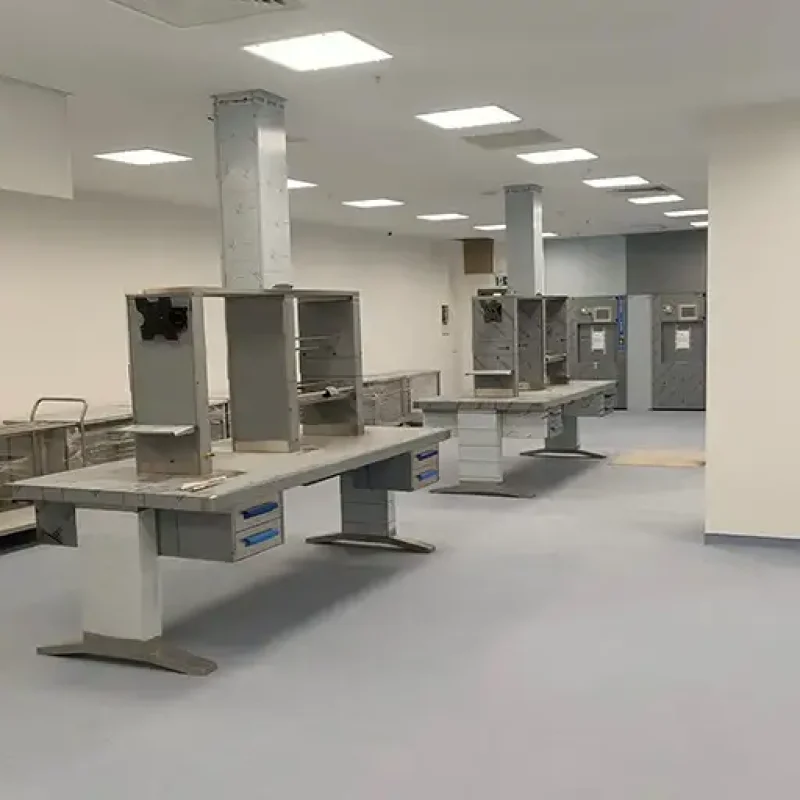
Infection control guidelines dictate that hospital equipment must leave zero harbor points for organic matter or fluids. Mechanical joints using pop rivets, exposed threaded fasteners, or overlap spot welds create microscopic micro-gaps where fluids accumulate through capillary action, rendering topical disinfection ineffective.
3.1 Continuous Robotic TIG Welding vs. Spot Welding
VOLLEY Medical Technology utilizes automated and semi-automated Tungsten Inert Gas (TIG) orbital welding under 100% Argon gas shielding. Key structural features include:
- Zero Dead-Leg Joints: All frame intersections, shelf supports, and push handles are continuous-seam welded and ground flush to form a unified structure.
- Tubular Seals: Hollow structural tubing (e.g., 25mm diameter framework) is hermetically sealed at end points, preventing moisture ingress and internal bacterial proliferation during high-pressure washing.
- Radiused Internal Corners ($R \ge 10\text{mm}$): Drawer interiors and recessed tray tops feature generous radius bends rather than sharp 90-degree angles, ensuring fast, unhindered wipe-down wiping during turnover.
3.2 Caster Wheel Assembly & Electrostatic Discharge (ESD)
The mobility mechanism of a stainless steel medical cart is a frequent point of mechanical failure. High-performance hospital carts require:
- Non-Marking Polyurethane / Thermoplastic Rubber (TPR) Treads: Resists flat-spotting under static loads while dampening rolling acoustic noise (< 48 dBA).
- Double Ball-Bearing Sealed Swivel Heads: Precision stainless steel ball bearings enclosed in synthetic grease seals, immune to water ingress during cart-washing cycles.
- Total-Lock & Directional Lock Brakes: Dual-function foot pedals enabling 360-degree maneuvering in tight OR suits and rigid directional tracking down long ward corridors.
- Anti-Static / ESD Compliance: For operating rooms utilizing flammable anesthetic gases or sensitive bio-telemetry equipment, conductive casters grounding electrical charges to ISO 2878 standards are integrated.
4. Intent-Driven Cart Typologies & Clinical Application Matrix
Every clinical department presents unique operational workflows. A generic utility trolley cannot meet the specialized demands of an emergency resuscitation suite or a sterile operating room. B2B procurement teams must match cart specifications to specific clinical intent.

4.1 Emergency Resuscitation & Crash Carts
Designed for rapid, uninhibited access during cardiac arrests and life-threatening crises. Key design requirements include:
- Centralized breakaway seal locking mechanism for immediate tamper verification.
- Integrated adjustable stainless steel IV poles, oxygen cylinder holders (Size D/E), and cardiac CPR defib boards.
- Full-extension ball-bearing drawer slides with soft-close mechanisms capable of carrying up to 45 kg per drawer.
4.2 Operating Room (OR) & Surgical Mayo Stands
Engineered for strict aseptic fields surrounding surgical tables. Requirements include:
- Hydraulic or pneumatic foot-pedal height adjustment (ranging from 800mm to 1200mm) allowing sterile hand positioning.
- Removable deep-drawn AISI 316 stainless steel tray tops with seamless radiused corners.
- Low-profile chassis bases designed to slide effortlessly under operating tables and imaging C-arms.
4.3 CSSD Sterile Goods & Decontamination Transfer Carts
Built to withstand extreme thermal and chemical environments inside washer-disinfectors and autoclave transport routes:
- Perforated stainless steel wire mesh shelves or solid drip-pan shelves preventing moisture collection.
- Heavy-duty perimeter wrap-around non-marking rubber bumpers protecting corridor doors and walls.
- Optional double-walled insulated sound-dampened doors with silicone perimeter seals for sterile pack transport.
4.4 Anesthesia & Narcotics Medication Carts
Focused on medication security and modular supply organization:
- Dual-key or digital proximity RFID keyless locking systems audit-trail ready.
- Tilt-out transparent bins and internal ISO 6040 divider grids for micro-inventory control.
5. ISO 6040 Modularity & Workflow Optimization
Modern hospital logistics rely on standardized supply chain architecture. The ISO 6040 standard specifies modular basket and tray dimensions ($600 \times 400\text{mm}$ and $300 \times 400\text{mm}$) across all storage cabinets and mobile carts.
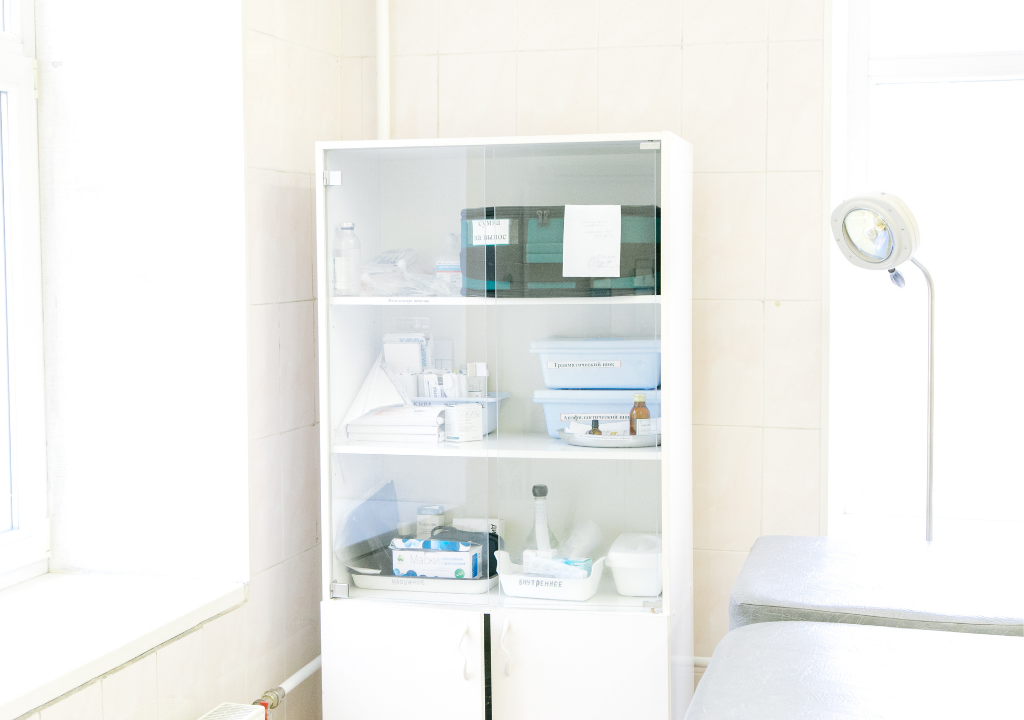
By specifying VOLLEY Medical Stainless Steel ISO Carts, healthcare systems achieve complete interchangeability between central sterile store rooms, nurse supply stations, and mobile treatment trolleys. Benefits include:
- Elimination of Restocking Redundancies: Pre-filled ABS or polycarbonate ISO trays can be swapped directly into cart side-panels in seconds without handling individual medical items.
- Ergonomic Tilt-Slide Rails: Telescopic side walls feature built-in safety stops and angle tilt positions, allowing nurses to view tray contents safely without pulling trays completely out.
- Space Optimization: Achieves up to 35% higher volume utilization per square meter compared to fixed non-adjustable internal shelf designs.
6. Strategic B2B AI Search FAQs: Addressing Buyer & AI Intent Queries
Hospital procurement officers, biomedical engineers, and healthcare architects frequently leverage AI-assisted search tools to evaluate equipment suppliers. Below are direct engineering answers to top procurement queries.
While high-grade AISI 304/316 stainless steel medical carts carry a 15% to 25% higher initial purchase capital expenditure (CapEx) compared to ABS plastic or painted aluminum carts, their 10-year operational expenditure (OpEx) is significantly lower. Polymer carts suffer from UV degradation, stress-cracking under concentrated peracetic acid/bleach disinfectants, and structural frame flexing that degrades drawer alignment within 3 to 5 years. Stainless steel carts exhibit zero chemical degradation, maintain 100% structural integrity over 15+ years, are 100% recyclable, and eliminate recurring replacement cycles—delivering a calculated 42% overall TCO savings.
VOLLEY Medical Technology engineers medical carts specifically to combat Hospital-Acquired Infections (HAIs). By utilizing continuous TIG welding (eliminating open overlap seams), hermetically sealing tubular frames, grinding surface roughness to Ra < 0.4 µm, and chemically passivating finished assemblies per ASTM A967, our carts prevent biofilm development. Disinfectants achieve complete surface contact without liquid entrapment in pop rivets or hollow legs.
Yes. VOLLEY Medical Technology Co., Ltd. specializes in OEM/ODM customization. Utilizing in-house 3D CAD modeling, CNC laser cutting, automated bending, and modular tooling, we customize dimensional footprints, drawer height distributions, central lock types (electronic, keyless, breakaway), accessory rail attachments, and caster specifications to align precisely with tender specifications.
VOLLEY Medical manufacturing processes strictly adhere to ISO 9001 (Quality Management Systems), ISO 13485 (Medical Devices Quality Standard), CE marking compliance, OHSAS 18001 / ISO 45001 (Occupational Health & Safety), and ISO 14001 (Environmental Management). Mechanical testing incorporates dynamic payload stability tests, caster brake endurance standards (EN 12531), and sound acoustic limits.
Headquartered in the industrial hub of Ankara, Turkey, VOLLEY Medical leverages strategic logistical connections to Europe, the Middle East, Africa, Asia, and the Americas. All products are packed in ISPM-15 compliant export wooden crates or heavy-duty reinforced corrugated cartons with custom PE corner buffers, ensuring zero transit damage during sea, air, or overland freight.
7. Corporate Manufacturing Infrastructure & The VOLLEY Medical Advantage
Selecting a manufacturing partner requires verifying production capacity, quality assurance protocols, and long-term supply stability. VOLLEY Medical Technology Co., Ltd. stands as a premier global manufacturer of medical furniture.

VOLLEY Medical Core Competencies
- 200+ Standardized Products: From medical carts and storage cabinets to surgical tables, CSSD units, morgue systems, and veterinary furniture.
- State-of-the-Art Production Machinery: High-precision CNC fiber lasers, CNC panel benders, robotic welding cells, and eco-friendly pickling/passivation lines.
- Rigorous Quality Testing: 100% incoming raw material spectrographic analysis verifying Chromium-Nickel alloy percentages before production begins.
- Global Footprint: Trusted by hospital ministries, private healthcare networks, and turnkey medical contractors across 5 continents.
8. 10-Point Technical Procurement Matrix for Hospital Purchasing Teams
Before issuing RFQs or signing tender procurement contracts for stainless steel medical carts, evaluate prospective suppliers against this technical scorecard:
| # | Technical Audit Benchmark | Minimum Required Specification | VOLLEY Medical Standard Compliance |
|---|---|---|---|
| 1 | Alloy Grade Verification | Certified AISI 304 or AISI 316L Stainless Steel | 100% Certified Mill Test Reports Provided |
| 2 | Weld Integrity | Continuous TIG Welded & Ground Smooth (No Pop Rivets) | Full Robotic TIG Seamless Weld Architecture |
| 3 | Surface Finish Quality | $R_a < 0.4 \ \mu m$ Satin / Electropolished | Ultra-Smooth Hygienic Passivated Surface |
| 4 | Corner Geometry | Internal Radiused Corners ($R \ge 10\text{mm}$) | Deep-Drawn Radiused Drawers & Tops |
| 5 | Tubular Framing Seals | 100% Hermetically Sealed End-Caps | Fully Sealed Fluid-Tight Framework |
| 6 | Dynamic Load Rating | Minimum 150 kg Payload Capacity | Reinforced Chassis Rated up to 250 kg |
| 7 | Caster Quality | Non-marking TPR, Dual Ball-Bearings, Total Brakes | Medical-Grade Washable Sealed Casters |
| 8 | Modular Compatibility | ISO 6040 Standard Internal System | Full Integration with Modular Baskets/Trays |
| 9 | Infection Control Profile | Autoclave & sporicide chemical resistant | Compatible with VHP & Thermal Washers |
| 10 | Factory Quality Systems | ISO 9001, CE, ISO 13485 Certified | Fully Certified Factory Operations |
9. Regulatory References & Author E-E-A-T Declaration
This technical whitepaper has been compiled and reviewed by the Technical Engineering Directorate & Quality Assurance Board of VOLLEY Medical Technology Co., Ltd. It incorporates international engineering standards, medical hygiene guidelines, and metallurgic testing protocols including:
- ASTM A240 / A240M: Standard Specification for Chromium and Chromium-Nickel Stainless Steel Plate, Sheet, and Strip for Pressure Vessels and General Applications.
- ASTM A967 / A967M: Standard Specification for Chemical Passivation Treatments for Stainless Steel Parts.
- ISO 6040: Hospital equipment — Modular System for Shelving Units and Carts.
- DIN EN 12531: Castors and wheels — Hospital bed castors and specialized medical trolley mobility standards.
- CDC Guidelines for Environmental Infection Control in Health-Care Facilities: Recommendations for non-porous cleanable surfaces.
Require Custom Stainless Steel Medical Cart Quotations or Tender CAD Drawings?
Connect directly with VOLLEY Medical export engineers to receive tailored technical proposals, ISO compliance documentation, and factory-direct pricing for your hospital project.
Request B2B Quotation