Finding China’s top surgical instrument trolley suppliers takes more than comparing catalogue photos. A polished stainless-steel frame can look convincing online, yet the details matter: smooth welds, quiet casters, secure brakes, stable shelves, and drawers that open without sticking. Surgical instrument trolleys must suit real workflows, from moving sterile packs to keeping commonly used tools within reach. Small design flaws become obvious in a busy clinical room.
Surgeon and writer Atul Gawande observed, “The volume and complexity of what we know has exceeded our individual ability to deliver its benefits correctly, safely, or reliably.” This comment is not specifically about trolley design, but it highlights why dependable equipment and clear processes matter in healthcare. Buyers should examine product specifications, material details, load ratings, cleaning guidance, and quality documents. They should also ask suppliers about sample inspections, customization, production lead times, and after-sales support.
There is no single supplier that fits every facility. A trolley suited to a compact treatment room may not serve a large operating department well. This guide will compare supplier capabilities and explain what buyers can verify before placing an order. It will also consider a less tidy reality: published specifications do not always show how a trolley handles on an actual floor. Requesting a sample or detailed inspection is prudent, though it adds time. The aim is not to name a winner by appearance alone. It is to help readers make a careful, evidence-based shortlist.
What Surgical Instrument Trolleys Do: Types, Materials, and Clinical Uses
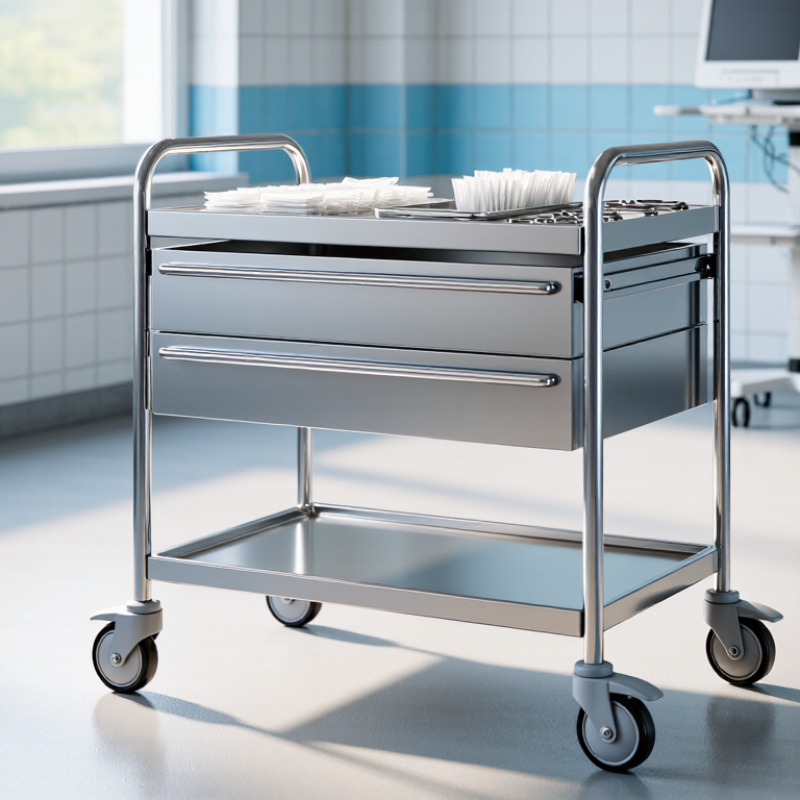
Surgical instrument trolleys keep instruments and supplies close to the point of care. Their purpose is practical: organize items, support safe handling, and reduce unnecessary movement. A two-shelf trolley may suit routine procedures, while models with drawers help separate sterile packs from frequently used supplies. Small details matter. Smooth edges, secure brakes, and quiet, easy-rolling casters can make a busy room calmer.
Trolleys vary in design and material. Stainless steel is durable and tolerates frequent cleaning, but can feel heavy when moved between rooms. Aluminum is lighter, though its finish and construction need to suit the cleaning products used. Polymer surfaces may reduce weight and resist moisture, but their load limits and scratch resistance should be checked. Material choice is not just about appearance.
In operating rooms, open trolleys can provide quick access to prepared instruments; enclosed designs help protect stored items during transport. Dressing and treatment rooms may use compact carts for wound-care supplies or diagnostic tools. Match shelf height and working surface to staff and procedure needs. No trolley is perfect. A narrow model may pass through tight spaces but offer too little work area. Teams should assess the actual route, load, cleaning routine, and storage needs before choosing one.
China Top Surgical Instrument Trolley Suppliers? - What Surgical Instrument Trolleys Do: Types, Materials, and Clinical Uses
| Trolley Type | Common Materials | Typical Configuration | Clinical Uses | Mobility and Cleaning Considerations | Selection Points |
|---|---|---|---|---|---|
| General-purpose instrument trolley | Stainless steel, commonly grade 304; some models use other stainless-steel grades or coated components. | One or more flat shelves, raised edges, and a wheeled base; shelf count and dimensions vary by model. | Moving instruments, supplies, or equipment between clinical areas; staging items for procedures. | Look for smooth, accessible surfaces and wheels that can be cleaned. Follow the facility’s cleaning protocol. | Check shelf dimensions, safe working load, wheel quality, and whether raised edges suit the intended items. |
| Mayo stand | Stainless-steel tray and frame are common; adjustable components may include metal or other durable materials. | A single instrument tray on an adjustable-height support, usually with a wheeled base. | Positioning selected instruments close to the sterile field during surgery. | Tray adjustment and movement should be stable and controlled; clean according to the manufacturer’s instructions. | Assess height range, tray size, locking or adjustment mechanism, stability, and compatibility with local workflows. |
| Dressing or procedure trolley | Stainless steel, powder-coated metal, or combinations of metal and durable polymer components. | May include shelves, drawers, side rails, or holders for commonly used supplies. | Organizing dressings and procedure supplies in treatment rooms, outpatient clinics, or wards. | Drawers and fittings add surfaces and crevices that need to be included in cleaning routines. | Choose storage that supports separation and access without obstructing cleaning or creating unnecessary clutter. |
| Covered or enclosed trolley | Stainless-steel or coated-metal body, often with metal or polymer doors and handles. | Enclosed shelves or compartments; some designs include doors, drawers, or a lock. | Transporting or storing supplies where a closed enclosure is appropriate to the facility’s process. | A closed trolley can help shield contents from incidental contact, but does not by itself ensure sterility. | Confirm access requirements, internal dimensions, lock needs, cleanability, and the intended transport process. |
| Instrument transport trolley | Stainless steel is common; some designs use compatible trays, containers, or polymer components. | Shelves, racks, or supports arranged for moving instrument trays or containers. | Moving instrument sets between designated processing, storage, and clinical areas, according to facility procedures. | Separate clean and contaminated transport as required by local infection-prevention procedures; clean the trolley after use as specified. | Verify tray or container fit, load limits, route clearance, braking, and compatibility with the facility’s handling process. |
| Height-adjustable trolley | Typically a metal frame and shelf or tray; adjustment mechanisms may be mechanical or powered, depending on design. | A work surface with adjustable height, mounted on a stable base; controls and adjustment range vary. | Supporting tasks that benefit from a work surface positioned for different users or procedures. | Inspect moving parts and controls during routine checks; apply the manufacturer’s cleaning and maintenance instructions. | Review adjustment range, stability throughout that range, load rating, power needs if applicable, and service requirements. |
| Wire-shelf trolley | Chrome-plated or coated steel wire is common; material and finish should suit the environment and cleaning process. | Open wire shelves on a wheeled frame, sometimes with adjustable shelf positions. | Transporting or organizing general supplies where an open shelf design is suitable. | Open construction permits access around shelves, while wire joints and coatings still require inspection and cleaning. | Check that shelf spacing, finish, and edge design suit the items; avoid use where an open design conflicts with handling requirements. |
Note: Trolley dimensions, materials, load ratings, features, and intended uses vary by model. Confirm the product specifications and follow the manufacturer’s instructions and applicable facility procedures for cleaning, transport, and use.
FAQS
It supports documented quality processes, risk management, and supplier controls. Look for weld checks, calibrated tools, and recorded brake tests. A certificate alone is not proof.
Confirm its current status, manufacturing site, and product scope. Compare these details with the trolley being offered. The paperwork may still leave gaps.
Compare MOQ, production time, inspection time, shipping method, and delivery point. Ask whether spare shelves, castors, and handles are included. Small details add up.
Request written coverage details, including duration, excluded wear parts, replacement steps, and freight costs. Keep the reply on file. Verbal promises fade.
Specify dimensions, load capacity, steel grade, wheel locks, and tray layout. Ask whether changes affect MOQ, tooling costs, or delivery dates. Check a sample if details are critical.
It should match the exact model and configuration. Check the test method, date, sample, and laboratory. Look for load, stability, brake, weld, and cleaning-agent results. Generic reports prove little.
Ask for batch or serial records linked to materials and inspection logs. Confirm how defective parts are identified and kept from approved stock. Records should connect.
Review the applicable conformity documents and confirm the certificate covers the relevant site and product scope. Ask how cleaning instructions are validated. I might still want to inspect the finished trolley.
Conclusion
Surgical instrument trolleys support the safe, organized movement and storage of medical instruments in clinical environments. Available in different configurations, they may feature shelves, drawers, rails, or other fittings to suit specific workflows. Construction materials such as 304 or 316L stainless steel affect corrosion resistance, cleaning needs, and suitability for different settings. Buyers should also assess shelf load capacity and overall dimensions to ensure a trolley fits both the intended equipment and available workspace.
When evaluating suppliers in China, review how their quality management aligns with ISO 13485:2016 and compare practical terms such as minimum order quantity, production lead time, warranty, and customization options. Before purchasing, request relevant test reports and confirm that product identification and traceability information are clear. Checking these details alongside the required specifications can help buyers make a well-informed comparison and select a trolley suited to their operational needs.