Medical Furniture & Equipment Blog
Technical insights, product selection guides, and global hospital furniture standards from VOLLEY Medical Technology Co., Ltd.
10 Tips for Buying Surgical Examination Tables
Table of Contents
- Define Clinical Use: General Exams, Surgery, or Specialty Procedures
- Compare 500–700 lb Patient-Weight Ratings and Safety Margins
- Verify 18–19 in Accessible Height and 27–30 in Working Width
- Check IEC 60601-1 Compliance, Electrical Safety, and Motor Controls
- Assess 3–5 Year Warranty Terms, Cleanability, and Total Ownership Cost
- FAQS
- Conclusion
- Related Posts
Surgical examination tables are not merely platforms for patient positioning. They influence examination quality, clinician posture, cleaning routines, and daily workflow. A suitable table should match the procedures, room dimensions, and patient profile of the facility. Small details matter, including a stable base, smooth height adjustment, and accessible controls. Test it in person whenever possible. A specification sheet cannot reveal every practical weakness.
This guide presents ten useful tips for comparing Surgical examination tables with greater confidence. It considers weight capacity, upholstery, electrical or hydraulic operation, mobility, accessories, and infection-control requirements. Look closely at seams, casters, foot controls, and the space beneath the frame. Those areas often collect debris or create awkward cleaning problems. Check whether the table supports the positions clinicians actually use, rather than only the positions shown in a brochure. Ask about warranty coverage, service response, replacement parts, and training for staff. Reliable documentation is important, but supplier promises still require careful verification. No table is perfect. A quieter motor may increase cost, while a lower-priced model may need more maintenance. That trade-off deserves honest discussion. Feedback from nurses, physicians, and cleaning teams can reveal issues missed during a brief demonstration. A practical choice should support patient dignity, reduce unnecessary movement, and remain dependable through repeated use. Think beyond the purchase date. The best decision balances safety, ergonomics, durability, cleaning efficiency, and long-term ownership value.
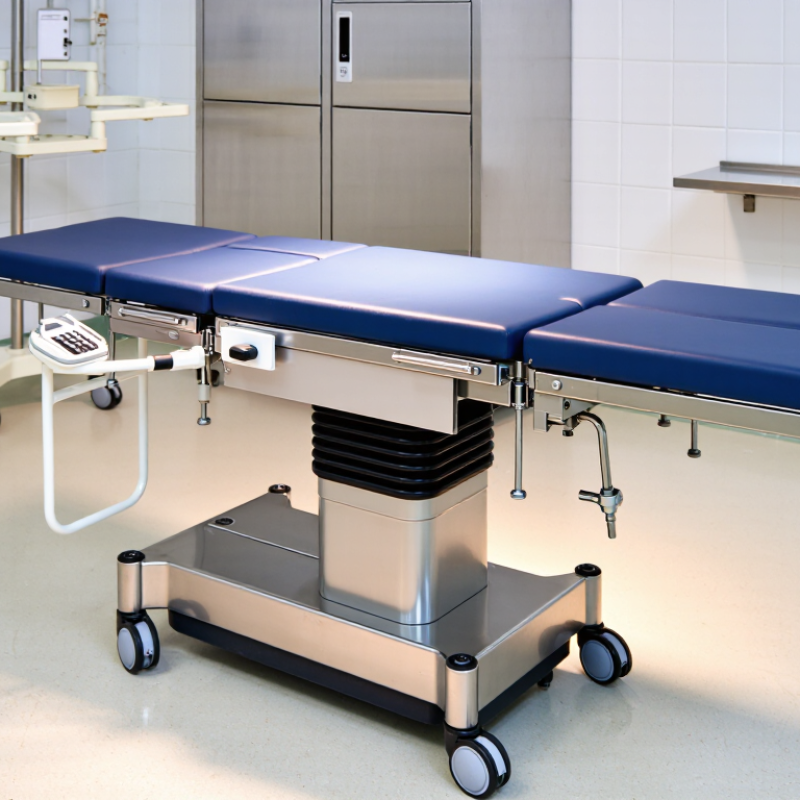
Define Clinical Use: General Exams, Surgery, or Specialty Procedures
Define the clinical use before comparing surgical examination tables. A general examination room needs easy patient access, stable height adjustment, and a surface that cleans quickly. These details support routine consultations, physical assessments, and short procedures. Comfort matters too. A narrow cushion can make even a ten-minute examination stressful.
Surgical use requires stricter planning. The table should support safe positioning, controlled movement, and reliable weight capacity during longer procedures. Look for a firm surface, secure side rails, and controls that staff can operate without leaving the sterile workflow. Electrical adjustment can improve precision, but only when the controls are intuitive. Complicated controls create delays. That risk is easy to underestimate.
Specialty procedures often need features that general tables cannot provide. Gynecological, urological, dermatological, and imaging-related work may require specific cutouts, attachments, drainage control, or unusual positioning. Confirm compatibility with existing instruments before purchasing. In practice, a table may fit the room but still block staff movement. Measure doorways, turning space, and working clearance around the patient. I once focused too heavily on maximum load and overlooked cleaning access beneath the frame. That was a practical mistake. Ask clinicians and cleaning staff to test the table together. Their feedback may reveal small problems that product specifications cannot show.
Compare 500–700 lb Patient-Weight Ratings and Safety Margins
A surgical examination table rated for 500–700 pounds supports approximately 227–318 kilograms. However, the rating is not automatically a safe patient limit. It may include the patient, mattress, stirrups, imaging accessories, and applied forces during repositioning. Ask whether the figure represents a safe working load or only a static test result.
The CDC’s National Center for Health Statistics reported obesity among 40.3% of U.S. adults during August 2021–August 2023. That figure makes capacity planning more than a specification exercise. A 500-pound table may suit routine examinations, but a 600- or 700-pound model offers more operational flexibility. Still, extra capacity is not a substitute for structural stability. Check lateral loading, full-height articulation, emergency positioning, and caster performance.
Use the table’s instructions for use, not sales language. ISO 14971:2019 supports documented risk management, while IEC 60601-2-46 addresses safety requirements for operating tables. A useful purchasing worksheet should add the patient’s weight, attachments, and transfer forces before comparing models. For example, a 600-pound rating leaves 100 pounds above a 500-pound patient, but that margin may shrink quickly. I would not treat that remainder as fully available. Real transfers are uneven. My own checklist would also record the test method, inspection interval, and failure response. A neat number can still hide an uncomfortable assumption.
Verify 18–19 in Accessible Height and 27–30 in Working Width
When buying a surgical examination table, verify an accessible height of 18–19 inches. This range can help patients transfer with less strain. It also supports safer assistance for nurses and caregivers. Measure from the floor to the table surface. Include the mattress thickness. Do not trust catalog figures alone. Real rooms differ.
Working width matters just as much. A 27–30 inch surface can provide stable support without making access difficult. During wound care or abdominal examinations, clinicians need enough elbow room. Yet excessive width may force staff to lean across the patient. That can increase fatigue during busy sessions. I have seen teams overlook this issue during showroom demonstrations. They noticed the upholstery first.
Test the table with actual staff before purchasing. Ask one clinician to stand beside it. Place a patient mannequin or weighted training pad on the surface. Check whether instruments remain within easy reach. Measure the lowest and highest positions repeatedly. Record the results, including the backrest angle. A table may meet the stated height but feel awkward in practice. That difference deserves attention. A wider surface is not automatically better. Keep mobility aids, flooring, and room clearance in the assessment. Small measurement errors can become daily problems.
Check IEC 60601-1 Compliance, Electrical Safety, and Motor Controls
When buying a surgical examination table, treat IEC 60601-1 compliance as a verification task, not a marketing phrase. Ask for the current declaration, test documentation, and applicable edition details. Confirm that the table addresses leakage current, protective grounding, insulation, and essential performance. A certificate alone may not explain every configuration.
Inspect the electrical design closely. The power cord should resist pulling at its entry point. Plugs, switches, and connectors should feel secure, even with gloved hands. Check whether the table has equipotential bonding for clinical environments. Look for clear fuse information and accessible service labels. Small details matter.
Test every motor control before purchase. Raise, lower, tilt, and return the table repeatedly. Listen for grinding, uneven movement, or delayed stopping. Controls should prevent accidental activation during patient transfer. A lockout function can help in crowded treatment rooms. Ask about emergency lowering when power fails. Battery backup is useful, but its operating time needs verification. Foot controls may improve workflow, while hand controls offer more precise positioning. Neither option is automatically safer.
Check the motor duty cycle and maximum load, including accessories and patient weight. Some tables appear stable but flex noticeably at full extension. I have found that a quiet motor can still move too slowly for busy rooms. That detail is easy to overlook. Request a demonstration with realistic positioning, not only an empty-table test. Local electrical requirements may differ, so qualified technical staff should review the installation before clinical use.
Assess 3–5 Year Warranty Terms, Cleanability, and Total Ownership Cost
10 Tips for Buying Surgical Examination Tables
A surgical examination table should be judged beyond its purchase price. Examine the warranty carefully, especially when the term is three to five years. Check whether it covers the frame, electric actuators, upholstery, foot controls, and replacement labor. Some warranties exclude frequent-use components or charge for on-site service. Read the exclusions. Ask about response times, shipping costs, and authorized repairs. A long warranty is weak if downtime remains your responsibility.
Cleanability deserves a hands-on inspection. Look for sealed seams, smooth welds, rounded edges, and cushions that do not trap fluids. Confirm that the upholstery tolerates your approved disinfectants without cracking, fading, or becoming sticky. Test the table after a realistic cleaning cycle. Small gaps can become unpleasant maintenance problems. I would also inspect the underside, where dust and residue are easily missed.
Total ownership cost includes installation, staff training, preventive maintenance, replacement parts, electricity, and downtime. Build a three-to-five-year estimate instead of comparing purchase prices alone. A cheaper table may require more actuator repairs or earlier upholstery replacement. Ask for service schedules and typical part lead times. Keep written assumptions, because estimates often look more certain than they are. One practical improvement is to involve nurses and technicians before purchasing. They notice transfer height, control placement, and cleaning obstacles that procurement teams may overlook. One detail can change everything.
| No. | Buying Dimension | What to Check | Practical Benchmark or Data Point | Why It Matters | Ownership-Cost Impact |
|---|---|---|---|---|---|
| 1 | Warranty Terms | Review coverage for the frame, electric actuators, control handset, upholstery, casters, and accessories separately. | Prefer a clearly written 3–5 year warranty for the main structure, with shorter component coverage disclosed in writing. | A single headline warranty period may not apply to every part of the table. | Longer structural coverage can reduce exposure to major repair or replacement costs, but exclusions, labor, shipping, and service-call fees must be confirmed. |
| 2 | Load Capacity and Stability | Check the rated patient weight, working load, lifting range, base footprint, and stability during adjustment. | Compare the manufacturer’s stated capacity with the facility’s maximum expected patient weight and any equipment load placed on the table. | The patient load and accessory load should both be considered; do not rely on patient weight alone. | Adequate capacity helps limit premature actuator, frame, and caster wear and reduces the risk of an early replacement. |
| 3 | Cleanability and Infection Control | Inspect seams, edges, hinges, gaps, buttons, upholstery joints, and areas beneath the backrest and seat. | Choose smooth, non-porous, fluid-resistant surfaces with sealed seams and minimal crevices; verify compatibility with the facility’s approved disinfectants. | Hard-to-reach surfaces can retain soil and increase cleaning time between patients. | A table that takes 2 additional minutes to clean between 20 appointments adds about 40 minutes of labor per day. |
| 4 | Upholstery and Chemical Resistance | Request the upholstery specifications and a chemical-resistance or care guide before purchase. | Confirm resistance to the disinfectants actually used by the facility, including the required concentration, contact time, and rinsing instructions. | A material can be fluid-resistant but still be damaged by repeated exposure to an incompatible disinfectant. | Premature cracking, discoloration, or peeling can create upholstery-replacement costs and interrupt room availability. |
| 5 | Adjustment Range and Ergonomics | Evaluate minimum and maximum height, backrest movement, leg support, patient transfer height, and clinician working posture. | Select a range that supports safe patient transfers and allows clinicians to work without excessive bending or reaching. | Ergonomic suitability depends on patient population, clinician height, procedures, and room layout. | Better positioning can reduce handling time and may lower the likelihood of avoidable staff strain or workflow delays. |
| 6 | Controls, Safety, and Emergency Access | Test the handset, foot control, emergency stop, lockout features, pinch-point protection, and access to controls from both sides. | Controls should be intuitive, clearly labeled, and positioned so staff can stop movement quickly when needed. | Safety features are useful only when staff can locate and operate them during a busy clinical encounter. | Clear controls can reduce misuse, service calls, and downtime caused by accidental operation or preventable damage. |
| 7 | Mobility and Room Fit | Measure doorways, lifts, corridors, turning areas, storage locations, and the table’s overall dimensions with accessories installed. | Confirm doorway clearance, caster performance, central locking, and the ability to move the table safely when occupied or unloaded. | A table that cannot be moved efficiently may require additional staff or remain in one room permanently. | Poor mobility increases labor time, room-change time, and the risk of wall, floor, or equipment damage. |
| 8 | Serviceability and Spare Parts | Ask about preventive-maintenance intervals, replacement-part availability, service documentation, and authorized repair support. | Obtain expected lead times for common wear items such as casters, actuators, upholstery components, fuses, and control units. | A low purchase price can become expensive if repairs require long waits or full-module replacement. | Parts availability directly affects downtime, rental-equipment needs, and the useful life of the table. |
| 9 | Standards and Documentation | Request user instructions, cleaning instructions, electrical specifications, maintenance requirements, and applicable conformity documentation. | Documentation should identify safe operating limits, electrical requirements, cleaning agents, inspection points, and intended use. | Complete documentation supports staff training, risk management, and consistent maintenance records. | Clear records can reduce training time and help prevent warranty exclusions caused by incorrect cleaning or operation. |
| 10 | Total Cost of Ownership | Compare purchase price, delivery, installation, training, cleaning labor, preventive maintenance, repairs, consumables, downtime, and disposal. | Five-year TCO = purchase and setup cost + operating cost + maintenance and repairs + downtime cost − residual value. | The lowest initial price is not necessarily the lowest cost over the planned service period. | Use the same assumptions for every model, including labor rates, annual patient volume, cleaning time, service frequency, and expected replacement parts. |
FAQS
General exams need easy access, stable height adjustment, and quick cleaning. Surgical work needs secure positioning and reliable weight support. Specialty procedures may require cutouts, attachments, drainage control, or unusual positioning. Choose for real procedures, not imagined ones.
Measure doorways, turning space, and working clearance around the patient. Check whether staff can move freely beside the table. A table may fit the room but still block equipment or transfers. I once focused on load capacity and missed cleaning access underneath.
Request current compliance documents for IEC 60601-1 and confirm the applicable edition. Review leakage current, protective grounding, insulation, and essential performance. Check the cord entry, connectors, fuse information, and service labels. A certificate alone may not explain every configuration.
Raise, lower, tilt, and return the table repeatedly. Watch for grinding, uneven movement, delayed stopping, or excessive flexing. Test controls with gloves and realistic patient positioning. Empty-table demonstrations can hide practical problems.
Foot controls may support workflow, while hand controls can provide precise positioning. Neither option is automatically safer. Check accidental activation risks during patient transfer. A lockout function may help in crowded treatment rooms.
Ask how the table lowers during power failure. Verify battery backup duration instead of accepting general claims. Check whether staff can operate emergency functions quickly. Quiet movement is helpful, but slow movement may disrupt busy rooms.
Check coverage for the frame, actuators, upholstery, controls, labor, and replacement parts. Review exclusions carefully. Ask about repair response times, shipping charges, and authorized service. A long warranty means little if downtime remains your responsibility.
Look for sealed seams, smooth welds, rounded edges, and cushions without fluid-trapping gaps. Confirm compatibility with approved disinfectants. Include installation, training, maintenance, parts, electricity, and downtime in the cost estimate. Ask nurses and technicians to test cleaning and transfers. Their feedback may reveal what specifications miss.
Conclusion
Choosing the right Surgical examination tables requires careful attention to clinical needs, patient safety, and long-term value. Start by defining whether the table will support general examinations, surgical procedures, or specialized treatments, as each use may require different positioning features and accessories. Compare patient-weight ratings in the 500–700 lb range, while also considering an appropriate safety margin for movement and equipment. Accessible height, ideally 18–19 inches, and a working width of approximately 27–30 inches can improve patient access and clinician comfort.
Before purchasing, verify compliance with IEC 60601-1 and review the table’s electrical safety systems, motor controls, and emergency features. Also assess warranty coverage of three to five years, the ease of cleaning and disinfection, and the total cost of ownership, including maintenance, replacement parts, and energy use. A thoughtful evaluation helps ensure reliable performance, safe operation, and practical value over time.

Blog Tags: