Knowledge & Industry Insights

Medical Furniture & Equipment Blog

Technical insights, product selection guides, and global hospital furniture standards from VOLLEY Medical Technology Co., Ltd.

0%

Choosing Laboratory stainless steel furniture in 2026 means balancing hygiene, durability, safety, and cost—not simply choosing the shiniest workbench. Laboratory furniture market analyses from Grand View Research and Research and Markets track continued demand for adaptable, durable laboratory environments. These reports offer useful market context, but they cannot tell you whether a specific sink, cabinet, or bench suits your workflow.

Details matter. Check the steel grade, sheet thickness, weld quality, and finish. A smooth, properly finished surface is easier to clean; weak joints and poorly sealed edges can collect residue. Ask suppliers for material specifications, load ratings, cleaning guidance, and warranty terms. Then compare them with your actual work: corrosive reagents, heavy instruments, wet procedures, or frequent equipment changes. A crowded bench is a warning.

Safety educator Dr. James A. Kaufman, founder of the Laboratory Safety Institute, is associated with the reminder, “Safety is no accident.” That principle applies to furniture selection, too. Consider stable construction, accessible storage, rounded edges, and compatibility with your cleaning routine. Check relevant project requirements and applicable standards before ordering; a product description alone is not proof of compliance. In 2026, customization may help, but it can also complicate replacement parts and maintenance. That trade-off deserves a second look. The right choice is the one your team can clean, inspect, and use reliably—not merely the one that looks convincing in a catalog.
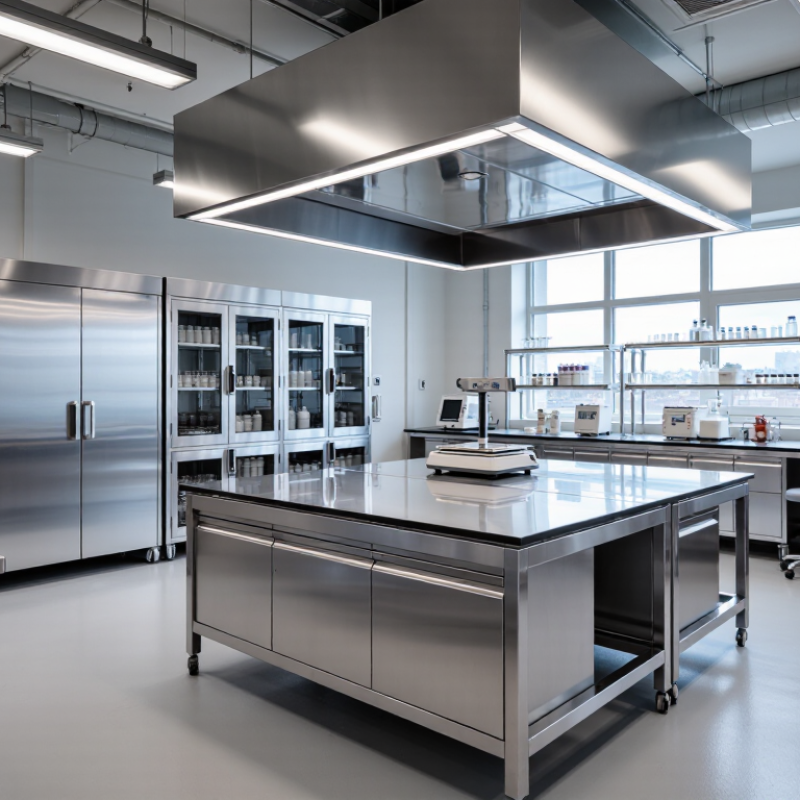
How to Choose Laboratory Stainless Steel Furniture in 2026

Define Laboratory Needs and Operating Conditions

Before choosing laboratory stainless steel furniture, document the work done at each bench. Note equipment weight, spill types, cleaning agents, sink locations, and whether staff move carts through the area. A balance station needs a rigid, vibration-resistant surface; a wash-down zone needs smooth joints and easy access beneath the bench. Measure doorways and service connections, too. Small details matter.

Operating conditions can change the specification. The U.S. Department of Energy’s Labs21 guidance reports that laboratories may use roughly 5–10 times more energy per square foot than office buildings, partly reflecting ventilation and equipment demands. The range is wide. Still, it signals why heat, humidity, airflow, and cleaning frequency belong in the furniture brief. The CDC and NIH’s Biosafety in Microbiological and Biomedical Laboratories, 6th edition, emphasizes task-based risk assessment. Apply that logic to surfaces and storage: identify likely exposure and cleaning routines before selecting grades, finishes, or open shelving. A stainless surface is not automatically the best answer everywhere. In a dry, low-corrosion room, a costly specification may add little value; that assumption deserves review against actual use. Conversely, frequent disinfectant contact or persistent moisture can make seams, fasteners, and undersides as important as the worktop.

Compare Stainless Steel Grades and Corrosion Resistance

How to Choose Laboratory Stainless Steel Furniture in 2026

Compare Stainless Steel Grades and Corrosion Resistance

Choosing laboratory stainless steel furniture starts with the chemicals, moisture, and cleaning routine it will face. ASTM A240/A240M composition tables specify Type 304 with 18–20% chromium and 8–10.5% nickel. Type 316 contains 16–18% chromium, 10–14% nickel, and 2–3% molybdenum. That molybdenum improves resistance to chloride-driven pitting near saline solutions and damp sink areas. Useful distinction. These figures describe composition, not guaranteed service life.

For dry benches and mild detergents, 304 is often a practical choice. Where bleach residues, saline samples, or frequent wet cleaning occur, 316 provides a wider corrosion-resistance margin. Still, no grade is immune. ASTM G48 uses ferric-chloride tests to compare pitting and crevice corrosion, but actual laboratory conditions can differ. Check the full specification: welded seams, brushed finishes, fasteners, and drain edges may corrode before broad panels. In practice, residue trapped beneath bottle rings can matter more than a polished top suggests. Request material documentation, inspect the welds, and clean spills promptly; grade alone is not enough.

Assess Furniture Types, Dimensions, and Ergonomic Features

How to Choose Laboratory Stainless Steel Furniture in 2026

Choose furniture by task, not appearance alone. Stainless steel benches suit wet preparation and frequent cleaning; mobile carts help move samples and tools between stations. Map sinks, equipment, and storage before ordering. A bench that blocks a drawer or leaves a cable stretched across the floor is the wrong size. Measure clearances with doors and stools in place. The U.S. Access Board’s 2010 ADA Standards specify accessible work-surface heights of 28 to 34 inches. Treat that range as an accessibility reference, not a universal ergonomic target; tasks and users differ.

Set bench depth around the equipment and reach distance. Frequently used pipettes, controls, and containers should sit close to the worker, while heavy items belong near waist height. Adjustable seating, footrests, and clear knee space can support varied users during seated work. Check rounded edges, stable legs, and smooth welds; tiny crevices can complicate cleaning. The honest trade-off: thicker steel may feel sturdier, but it can add cost and weight.

Tips: Mock up the bench footprint with tape, then test standing and seated tasks before purchase. Ask staff to reach the back edge while wearing usual protective clothing. Record discomfort and workflow snags for a week; observations may challenge the original plan.

Verify Safety Standards, Fabrication Quality, and Supplier Support

How to Choose Laboratory Stainless Steel Furniture in 2026

Safety starts with evidence, not a shiny finish. Ask suppliers to identify applicable standards, such as SEFA-8 for laboratory casework, and provide material certificates for stainless steel grades. Check that load ratings cover drawers, shelves, and benches in their installed configuration. Welds should be continuous and smooth, with no sharp edges or crevices that trap residue. A polished surface can still conceal poor fabrication. Inspect sample corners and joints closely.

The U.S. Bureau of Labor Statistics reported 2.4 recordable injury and illness cases per 100 full-time workers in private industry in 2023. This is not a laboratory-specific rate, but it reinforces the value of safer layouts, stable work surfaces, and clear equipment access.

Request drawings that show service connections and compatibility with ventilation plans; ANSI/AIHA Z9.5 provides guidance on laboratory ventilation. Supplier support matters after delivery, too. Confirm installation help, spare-part availability, warranty terms, and response times. Ask for cleaning and chemical-resistance guidance in writing.

One detail can be missed: stainless steel does not resist every chemical equally. Match the grade and finish to actual use, then revisit that choice with your safety team.

Plan Installation, Cleaning, and Long-Term Maintenance

In 2026, plan stainless steel furniture around the work, not just the room’s floor plan. Measure doorways, lift access, service clearances, and the final position of sinks before ordering. Leave room to reach wall joints and clean beneath benches. Small gaps matter. Confirm that the chosen grade suits your chemicals; chloride-rich products can damage stainless steel if residue remains. Check the laboratory’s cleaning procedures before approving a finish or layout.

The CDC and NIH’s Biosafety in Microbiological and Biomedical Laboratories, sixth edition, advises decontaminating work surfaces after work and after spills. Build that routine into the design: smooth seams, accessible corners, and removable shelves make cleaning easier to verify. World Stainless reported global stainless-steel production of 58.4 million tonnes in 2023, up 4.6% from 2022. That signals a mature material supply, not a guarantee that every fixture will last. The International Stainless Steel Forum estimates an 85% end-of-life recycling rate for stainless steel. Treat that as a material-stream estimate, not a promise about your furniture. Ask suppliers about replaceable feet, drawer slides, and standard fasteners. I would still inspect welds and undersides in person; polished surfaces can hide awkward cleaning traps. After installation, record cleaner types, inspection dates, and any corrosion near joints.

FAQS

What should I document before choosing laboratory furniture?

Record each task, equipment weight, spill types, cleaning agents, sink locations, and cart routes. Measure doorways and service connections. Small details matter.

When is stainless steel a practical choice?

It suits wet preparation and frequent cleaning. In a dry, low-corrosion room, a costly specification may add little value. Check actual use.

How can I choose the right bench size?

Map sinks, equipment, drawers, and storage before ordering. Measure with doors and stools in place. A blocked drawer is a real workflow problem.

What should I consider for bench height and reach?

Use accessibility guidance as a reference, not a universal ergonomic target. Keep frequently used tools close, and heavy items near waist height. Users differ.

How can I test a layout before purchase?

Mark the footprint with tape. Test standing and seated tasks in usual protective clothing. Record discomfort and workflow snags for a week.

What fabrication details should I inspect?

Look for smooth, continuous welds, rounded edges, stable legs, and joints without crevices. Inspect sample corners closely. A polished surface proves little.

What documents and ratings should I request?

Ask for material certificates, applicable standards, and load ratings for installed benches, drawers, and shelves. Request drawings showing service connections.

What support should a supplier provide after delivery?

Confirm installation help, spare parts, warranty terms, and response times. Get cleaning and chemical-resistance guidance in writing. Details can be missed.

Conclusion

Choosing Laboratory stainless steel furniture in 2026 starts with understanding the work it must support. Consider the laboratory’s processes, equipment, available space, temperature, moisture, and exposure to cleaning agents or chemicals. These conditions help determine the appropriate stainless steel grade and level of corrosion resistance. Compare benches, cabinets, sinks, shelving, and mobile units by their dimensions, load capacity, storage needs, and ergonomic features so staff can work comfortably and move through the room efficiently.

Before purchasing, check that the furniture meets relevant safety and performance requirements, and examine the quality of its welds, edges, finishes, and fittings. Ask suppliers about customization, delivery, installation, and after-sales support. Plan the layout and installation around utilities, access routes, and future changes to the workspace. A practical cleaning schedule and routine inspection of surfaces and joints can help preserve hygiene, appearance, and service life over time.

Amelia

Amelia

Amelia is a dedicated marketing professional with a profound expertise in the company’s product offerings. With a keen understanding of market dynamics and consumer needs, she plays a pivotal role in crafting compelling narratives that highlight the unique features and advantages of our services.......