Knowledge & Industry Insights

Medical Furniture & Equipment Blog

Technical insights, product selection guides, and global hospital furniture standards from VOLLEY Medical Technology Co., Ltd.

0%

Choosing the best Hospital transfer carts from China requires more than comparing prices or product photographs. Hospitals need equipment that performs safely during crowded shifts, narrow corridor turns, and repeated cleaning cycles. A cart may look strong online, yet its frame, brake system, or mattress support may reveal weaknesses during daily use.

Dr. Peter Pronovost, a respected patient-safety and healthcare quality expert, has said, “We need to make it easier for people to do the right thing.” That principle applies directly to hospital transport equipment. Clear controls, reliable brakes, smooth casters, and adjustable side rails can reduce unnecessary handling risks. Practical design matters.

This guide examines Chinese Hospital transfer carts through measurable factors, including load capacity, cart width, wheel quality, surface materials, safety belts, height adjustment, and after-sales support. It also considers factory experience, quality-control records, available certifications, and communication during customization. A low price can look attractive. That judgment is incomplete.

The strongest suppliers should provide realistic specifications, product testing details, replacement-part access, and clear warranty terms. Buyers should request samples or arrange independent inspections whenever possible. A polished catalog cannot confirm long-term durability. Even experienced purchasers can miss small issues, such as difficult-to-clean joints or weak brake pedals. This comparison therefore focuses on practical hospital use, not marketing language. No single cart fits every facility. A rural clinic, emergency department, and large medical center may need different solutions.
What Are the Best Hospital Transfer Carts from China?

What Are Hospital Transfer Carts and How Are They Used?

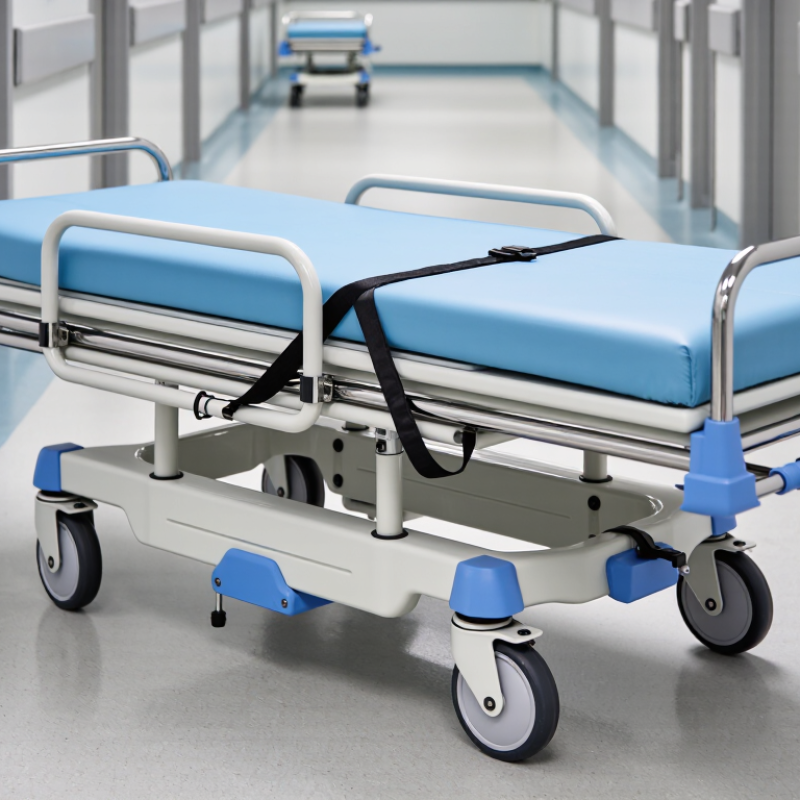
Hospital transfer carts are mobile platforms designed to move patients between beds, operating rooms, imaging units, and recovery areas. They usually include a padded surface, adjustable height, locking casters, side rails, and restraint options. Staff transfer the patient onto the cart, secure the rails, check tubing, and move slowly through corridors. The cart should fit elevators and pass through standard doorways. Small details matter. A loose wheel can change the entire transfer.

The safety case is substantial. The World Health Organization reports that one in ten patients experiences harm during healthcare delivery, with more than half considered preventable. The U.S. Bureau of Labor Statistics also recorded over one million nonfatal workplace injuries and illnesses in private healthcare and social assistance during 2022. These figures do not prove that carts caused injuries. They show why equipment selection needs evidence, training, and regular inspection. For buyers evaluating hospital transfer carts from China, ISO 13485-certified manufacturing, load testing, brake performance, surface durability, and cleaning compatibility deserve close review. However, certification alone is not enough. A cart may meet specifications yet feel unstable during a crowded transfer. Staff should test turning radius, height adjustment, mattress grip, and emergency access in real hospital conditions. I would also question whether the published safe working load reflects repeated daily use, not only a laboratory test.

Which Types of Hospital Transfer Carts Are Made in China?

China produces several hospital transfer cart types, each suited to different clinical routes and patient conditions.

Manual hydraulic stretcher carts remain common in emergency departments and inpatient wards. Their backrests, side rails, fifth wheels, and adjustable heights support routine transfers. Electric transfer carts add powered height adjustment and assisted movement. They reduce pushing effort, although charging discipline becomes essential.

China also manufactures lightweight folding transfer carts, wheelchair-style patient transport chairs, and narrow carts for elevators or crowded corridors. Bariatric models use reinforced frames and wider platforms for higher safe working loads.

Pediatric and neonatal carts usually include smaller mattresses, protective rails, and warmer-compatible designs. MRI-compatible carts use non-ferromagnetic materials, but staff must verify the exact operating zone. “MRI-safe” should never be assumed from appearance.

Industry data helps explain this variety. The China Association for Medical Devices Industry reported China’s medical device market exceeded RMB 1 trillion in recent years, showing strong manufacturing depth. Fortune Business Insights estimated the global patient handling equipment market at over USD 13 billion in 2023. These figures cover broader equipment categories, not transfer carts alone. That limitation matters.

In practice, buyers should compare load testing, braking performance, mattress seams, cleaning resistance, and spare-part availability. Reports describe market scale. They do not replace ward trials. A cart may meet its rated capacity yet steer poorly on uneven flooring. That is an easy detail to miss. Procurement teams should request test records, applicable standards, and user feedback before final selection.

What Features Define a High-Quality Transfer Cart?

A high-quality hospital transfer cart begins with patient safety, not appearance. It should roll smoothly over thresholds, stop firmly, and remain stable during turning. A reliable fifth-wheel design can reduce steering effort in narrow corridors. The frame needs a tested safe working load, not merely a generous marketing number. Side rails should lock securely and release without trapping fingers. Essential options include an adjustable backrest, IV pole, oxygen-cylinder holder, and accessible brake controls.

Cleanability is equally important. The World Health Organization’s Global Report on Infection Prevention and Control (2022) estimates that 7 out of 100 acute-care patients in high-income countries acquire at least one healthcare-associated infection. Therefore, carts should use sealed surfaces, rounded corners, minimal exposed fasteners, and materials compatible with approved disinfectants. Mattress seams deserve attention. They often collect fluid and dust.

For Chinese suppliers, buyers should request test records, load-cycle results, brake testing, and traceable quality documents. ISO 13485-based manufacturing controls and ISO 14971 risk-management records offer useful evidence, though certificates alone prove little. A cart may look excellent in a showroom. Hospital corridors are less forgiving. Check turning radius, doorway clearance, cleaning time, battery endurance, and repair access on-site. No cart is perfect. Even experienced evaluators can overlook noise, which may disturb patients during night transfers.

What Are the Best Hospital Transfer Carts from China?

Features That Define a High-Quality Transfer Cart

The chart presents a practical procurement-weighting model for hospital transfer carts. Patient safety, structural strength, maneuverability, infection control, and caregiver ergonomics receive the highest priority because these features directly affect daily clinical use, patient comfort, and operational efficiency. Buyers should also verify load capacity, braking performance, adjustable height, mattress compatibility, and compliance with applicable medical-device requirements.

How Should Chinese Hospital Transfer Carts Be Evaluated?

What Are the Best Hospital Transfer Carts from China?

Chinese hospital transfer carts should be evaluated by clinical performance, not appearance or price. The WHO Global Patient Safety Report 2024 states that about one in ten patients experiences harm during healthcare. More than half of this harm is considered preventable. A cart can reduce transfer risks only when its design supports controlled movement.

Check the safe working load, brake response, steering control, mattress stability, and side-rail strength. Test the cart with a realistic patient load, not an empty frame. Test it loaded. Measure how easily one nurse can push it across thresholds, wet floors, and narrow corridors. The evaluation should also review height adjustment, battery endurance, cleaning access, and noise during movement. These details affect patient comfort and staff safety.

Ask the manufacturer for traceable test records, material specifications, risk assessments, and quality-system evidence aligned with ISO 13485 and ISO 14971. Confirm whether production batches receive documented load and braking tests. The Global Burden of Disease research shows that falls remain a major source of injury worldwide, so wheel stability deserves serious attention. A supplier’s factory audit should examine training, inspection tools, corrective actions, and complaint handling. The scoring model will not be perfect. Real ward trials may reveal problems that certificates miss. That is useful evidence.

What Should Buyers Check Before Purchasing from China?

What Are the Best Hospital Transfer Carts from China?

Choosing a hospital transfer cart from China requires more than comparing prices. Buyers should check the cart’s load capacity, platform size, height range, and overall stability. Ask for exact measurements, not general descriptions. A cart may fit a product photo but fail inside a narrow hospital corridor. Check the wheel diameter, locking system, and turning radius on smooth and uneven floors. Test whether the brakes hold firmly when the cart carries a realistic patient load. Small details matter.

Tips: Request a working sample or detailed inspection video. Examine welds, frame joints, mattress seams, and moving handles. Ask how the steel is treated against corrosion. Confirm whether the hydraulic or electric lifting system has been tested repeatedly. A few minutes of testing cannot replace long-term evidence. Request load-test records, material information, user instructions, and maintenance guidance. These documents show whether the supplier understands clinical use, not just export procedures.

Buyers should also review factory experience, quality-control procedures, and after-sales support. Check whether replacement wheels, rails, batteries, or hydraulic parts remain available. Confirm packaging strength before shipment, especially for carts with adjustable mechanisms. Discuss inspection by an independent party when the order is large. It costs more, but it may reveal loose fasteners or uneven welding. I have seen attractive specifications hide uncomfortable handles and noisy casters. Do not ignore staff feedback. Ask the supplier to confirm local safety and medical-device requirements in writing, because compliance responsibilities may differ by destination.

FAQS

What types of hospital transfer carts are made in China?

Common types include manual hydraulic carts, electric carts, folding carts, and wheelchair-style transport chairs. Narrow, bariatric, pediatric, neonatal, and MRI-compatible models are also available.

How should a hospital choose the right cart type?

Match the cart to patient size, transfer route, corridor width, elevator space, and clinical needs. A narrow cart may work better in crowded wards.

Which safety features matter most?

Look for tested safe working loads, firm brakes, stable turning, and secure side rails. Adjustable backrests and fifth wheels can improve handling.

What should buyers test before purchasing?

Test carts over thresholds, uneven floors, doorways, and tight corners. Showrooms can mislead. Ward trials reveal problems earlier.

How important is cart cleanability?

It is essential. Choose sealed surfaces, rounded corners, few exposed fasteners, and disinfectant-resistant materials.

Why do mattress seams deserve attention?

Seams can trap fluid, dust, and cleaning residue. Inspect them closely, especially around edges and joins.

What should buyers check on electric transfer carts?

Check battery endurance, charging time, powered height adjustment, and manual backup controls. Charging discipline becomes important. Batteries are easy to neglect.

Can an MRI-compatible cart be used anywhere near an MRI room?

No. Verify the materials and the exact operating zone before use. Never trust appearance or an “MRI-safe” assumption.

Which supplier documents should procurement teams request?

Request load tests, brake tests, cycle results, applicable standards, quality records, and risk-management documents. Certificates alone prove little.

Do market statistics prove a cart is high quality?

No. Market figures show manufacturing scale, not individual cart performance. User feedback and ward testing still matter.

What details are commonly overlooked during evaluation?

Check noise, repair access, spare parts, turning radius, doorway clearance, and cleaning time. Night transfers can expose unexpected noise problems.

Conclusion

Hospital transfer carts are essential healthcare equipment used to move patients safely and efficiently between hospital rooms, operating areas, diagnostic departments, and recovery units. Chinese manufacturers produce various types, including manual transfer stretchers, hydraulic carts, electric models, and specialized carts for emergency or bariatric care. Each type is designed to meet different mobility, comfort, and workflow requirements.

A high-quality Hospital transfer carts should offer a stable frame, smooth steering, reliable brakes, adjustable height, secure side rails, comfortable padding, and easy-to-clean surfaces. Buyers evaluating products from China should review load capacity, materials, safety features, operating performance, certifications, customization options, and quality-control procedures. Before purchasing, they should also confirm product specifications, testing documentation, warranty terms, spare-parts availability, delivery schedules, and after-sales support. Careful comparison and sample testing can help hospitals select carts that provide dependable performance, patient protection, and long-term value.

Charlotte

Charlotte

Charlotte is a seasoned marketing professional with extensive expertise in the company's offerings. With a keen eye for detail and a passion for innovation, she plays a pivotal role in enhancing the brand's visibility and strengthening its market position. Charlotte frequently updates the company......