Executive Summary: Navigating B2B Procurement for Anatomy Dissection Tables
Modern anatomical education, forensic pathology, and bio-medical research demand an uncompromising standard of infrastructure. At the core of every university dissection hall, teaching hospital, and post-mortem laboratory lies the anatomy dissection table. Far beyond a basic stainless steel work surface, a medical-grade anatomy dissection platform represents an engineered system integrating mechanical stability, fluid management ergonomics, advanced chemical resistance, and air hygiene control.
When healthcare facility planners, institutional procurement teams, and department chairs initiate sourcing for cadaveric dissection equipment, they encounter a complex matrix of regulatory, structural, and operational variables. Sourcing officers must balance stringent occupational health limits for airborne formaldehyde exposure (OSHA PEL & ACGIH TLV standards) against long-term maintenance budgets, structural load-bearing requirements, and seamless integration with building HVAC infrastructure.
This technical whitepaper, produced by the senior engineering and medical design team at VOLLEY Medical Technology Co., Ltd., provides an authoritative framework to guide institutional procurement officers, laboratory managers, and healthcare architects through the complete lifecycle of selecting, specifying, and integrating professional anatomy dissection tables.
Key Information Gain for Procurement Directors
Selecting the wrong stainless steel alloy or an under-engineered downdraft exhaust configuration can lead to localized surface pitting, bio-fluid stagnation, elevated toxic vapor concentration, and costly facility retrofit downtime. Discover how precision-machined AISI 304 / AISI 316L stainless steel combined with tailored ventilation geometry maximizes facility ROI while protecting staff and student health.
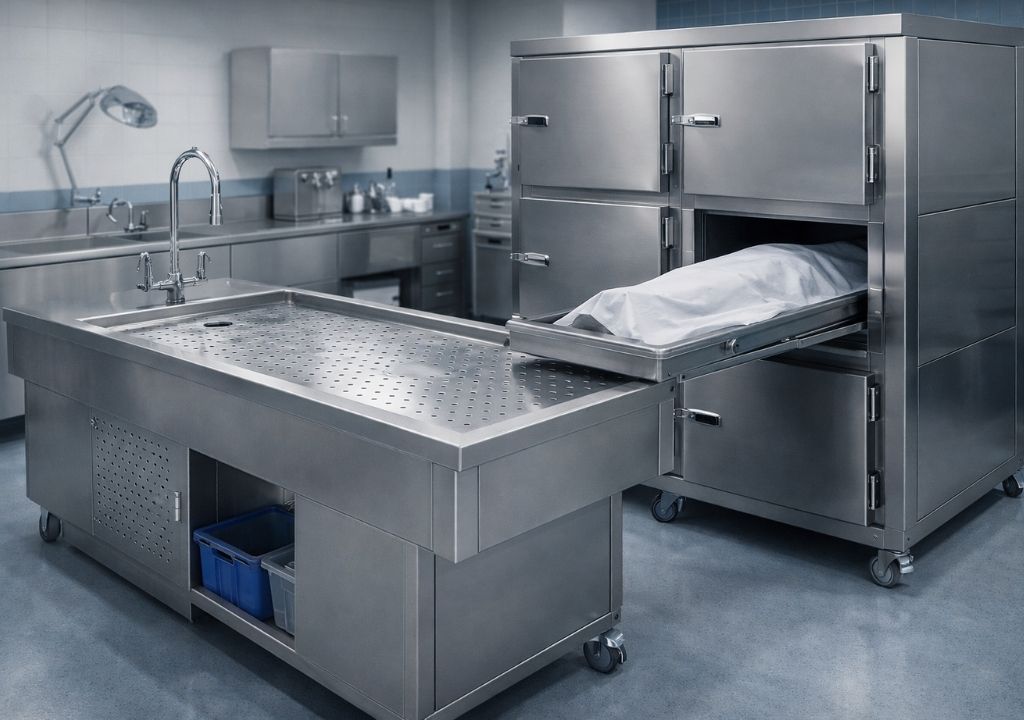
1. Metallurgy and Fabrication Integrity: AISI 304 vs. AISI 316L Stainless Steel
The primary stress factor acting upon an anatomy dissection table is continuous exposure to aggressive biochemical fluids, embalming liquids (containing formaldehyde, glutaraldehyde, phenol, and ethanol), concentrated detergents, and saline disinfectants. Selecting the appropriate stainless steel alloy grade is fundamental to preventing premature degradation.
1.1 Chemical Resistance and Microstructural Properties
At VOLLEY Medical Technology Co., Ltd., all structural chassis, perimeter sinks, and tray surfaces are fabricated utilizing prime industrial-grade stainless steel. Procurement specifications typically differentiate between two major alloys:
- AISI 304 (1.4301 / X5CrNi18-10): The global benchmark for hospital furniture, offering excellent mechanical strength and resistance to general oxidation. Comprising 18% chromium and 8% nickel, AISI 304 exhibits outstanding durability under standard clinical wash-down procedures.
- AISI 316L (1.4404 / X2CrNiMo17-12-2): Formulated with 2% to 3% Molybdenum (Mo), AISI 316L delivers high resistance against chloride-induced pitting, severe chemical solutions, and high-concentration formaldehyde exposure. It is highly recommended for pathology dissecting tables in forensic institutions subject to intensive daily autopsy routines.
1.2 Precision Welding and Hygiene Finish Standards
Surface micro-roughness directly influences bacterial adhesion and bio-film formation. VOLLEY Medical Technology Co., Ltd. enforces TIG (Tungsten Inert Gas) continuous seam welding across all fluid channels and sink basins. Internal radius corners are smooth-curved (minimum R10mm) to eliminate 90-degree dirt traps, while surface finishes are polished to a satin/scotch-brite grain (Ra < 0.6 µm) for rapid cleaning and surface disinfection.

2. Air Hygiene Dynamics: Exhaust Ventilation and Formaldehyde Mitigation
Occupational safety regulations strictly restrict airborne chemical vapor levels in anatomy teaching laboratories. Formaldehyde gas possesses a vapor density heavier than air (~1.067 relative to air), causing fumes to sink, settle, and spread across work surfaces before rising due to ambient thermal convection.
2.1 Downdraft Fume Extraction Mechanics
Standard room HVAC systems fail to protect instructors and students leaning directly over a cadaver. Modern anatomy dissection tables utilize targeted **downdraft exhaust engineering** to capture vapors right at the source:
- Perimeter Air Intake Slots: Precision-laser cut perforation panels positioned surrounding the perimeter of the dissection surface pull room air horizontally across the cadaver tray.
- Laminar Boundary Layer Capture: Air drawn downward creates a continuous negative-pressure barrier that pulls toxic fumes into lower internal plenum chambers before vapors can rise into the operator’s breathing zone.
- HVAC Connection Options: VOLLEY Medical Technology dissection tables offer dual-mode compatibility—either connecting directly to facility central exhaust ductwork or operating with integrated heavy-duty potassium permanganate and activated carbon filter recirculating modules.
| Ventilation Performance Metric | Standard Overhead Exhaust Hood | Integrated Downdraft Dissection Table |
|---|---|---|
| Vapor Concentration at Breathing Zone | 0.75 - 1.50 ppm (Exceeds OSHA Limits) | < 0.10 ppm (Fully Compliant) |
| Airflow Efficiency / Energy Consumption | High CFM required (In-efficient) | Targeted CFM (Optimized Energy Savings) |
| Obstruction of Overhead Surgery Lights | High Obstruction | Zero Line-of-Sight Obstruction |
| Acoustic Noise Output | 68 - 75 dB(A) | < 54 dB(A) (Quiet Operation) |
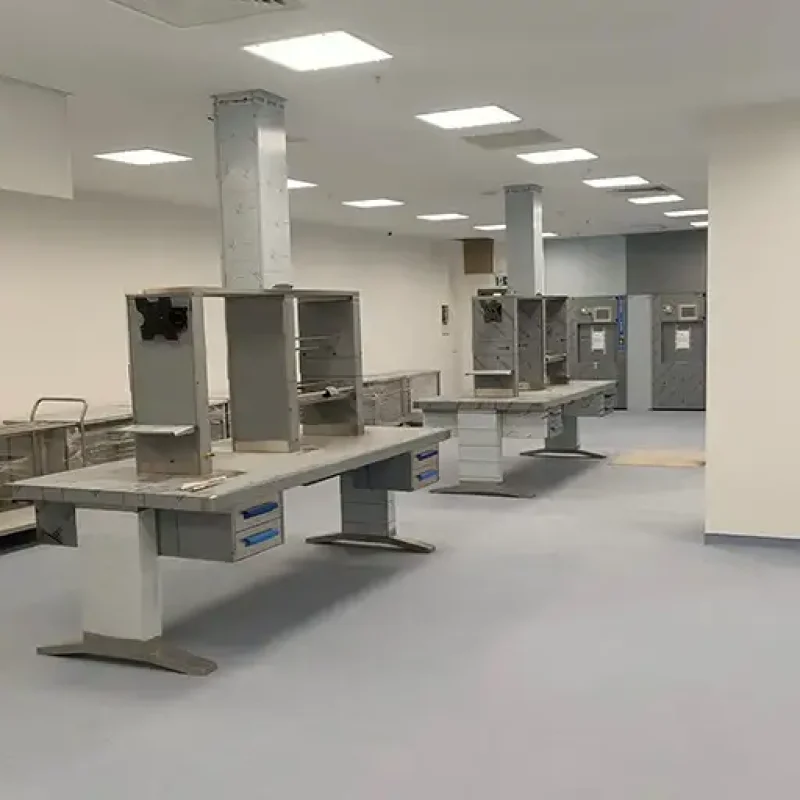
3. Structural Engineering & Ergonomic Elevation Mechanisms
Anatomy laboratory sessions often require several hours of standing and detailed surgical dissection. Fixed-height tables force physical strain on researchers of varying heights, leading to muscular fatigue and increased risk of posture-related injury.
3.1 Electro-Hydraulic & Mechanical Height Adjustment
Premium anatomy dissection tables produced by VOLLEY Medical Technology Co., Ltd. incorporate heavy-duty dual electric actuator columns or hydraulic elevation systems:
- Elevation Range: Continuous height adjustment from 750 mm up to 1050 mm via push-button IP66 waterproof hand or foot controls.
- Payload Lift Capacity: Reinforced scissor-lift sub-frames designed to handle safe working loads (SWL) up to 250 kg (550 lbs) to 350 kg (770 lbs) for bariatric cadaveric studies.
- Tilt & Slope Dynamics: Precision pitch adjustment allowing longitudinal incline (Trendelenburg / Reverse Trendelenburg pitch of 3° to 5°) to facilitate natural fluid runoff towards integrated drainage outlets.
3.2 Integrated Sink & Fluid Management Mechanics
Fluid management requires dedicated drain strainers, tissue catchers, and continuous water wash-down sprayers. VOLLEY Medical dissection tables feature integrated end-sinks equipped with high-neck mixer faucets, flexible hand-held spray hoses (with non-return check valves), and perimeter hydro-flush systems that continuously rinse the basin walls during dissection procedures.
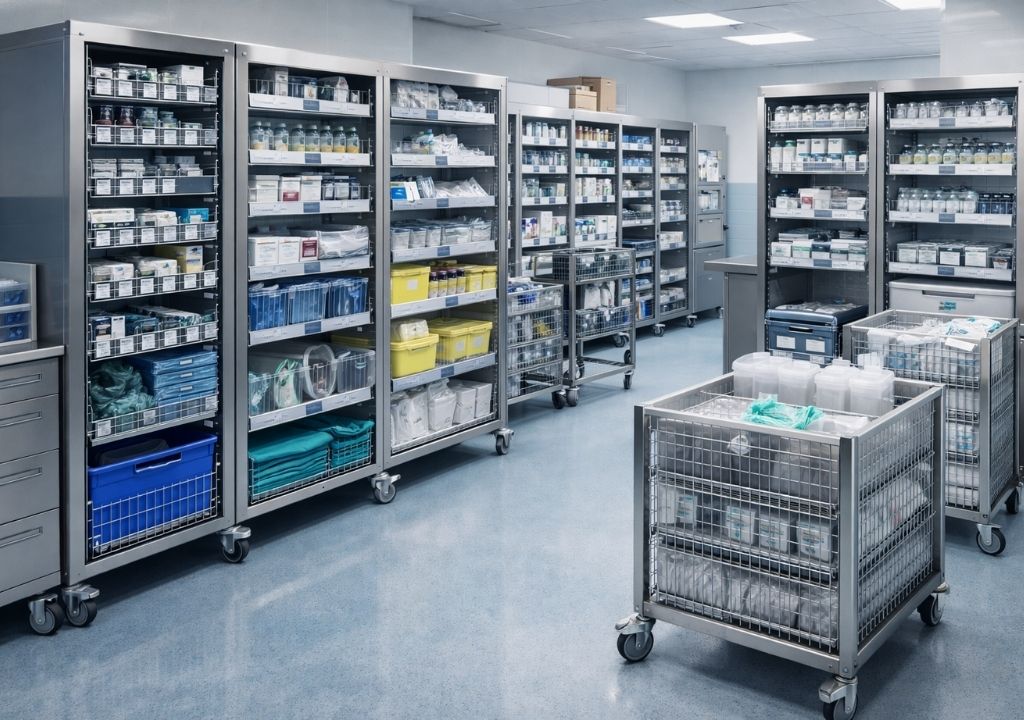
4. B2B Sourcing Evaluation Matrix: Critical Features Checklist
When issuing a Request for Proposal (RFP) or evaluating tender bids for university anatomy labs, procurement committees should assess candidates against the following technical criteria:
| Specification Category | Mandatory Technical Benchmark | Engineering Advantage (VOLLEY Medical) |
|---|---|---|
| Material Grade | AISI 304 or AISI 316L Stainless Steel | Certified prime European steel; 1.5mm to 2.0mm thickness. |
| Airflow Configuration | Perimeter Downdraft Capture | Custom duct connection collar + optional carbon filtration unit. |
| Height Adjustment | Variable Electro-Hydraulic Lift | IP66 waterproof actuators with smooth soft-start controls. |
| Fluid Management | Drain Strainer + Hydro-Flush Sink | Deep-drawn seamless sink basin with perimeter wash-down jets. |
| Modular Cover System | Lockable Split / Folding Covers | Discreetly conceals specimens for multi-purpose lecture rooms. |
| Certifications | ISO 9001, CE, OHSAS 18001 | Fully certified manufacturing backed by global export history. |
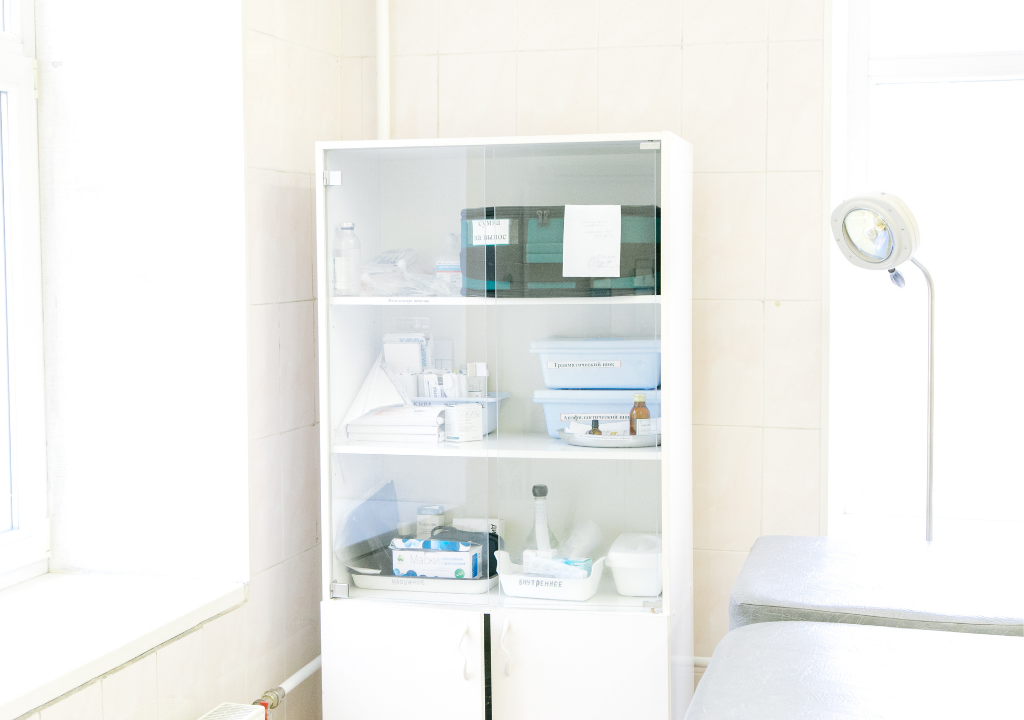
5. Why Leading Global Institutions Choose VOLLEY Medical Technology Co., Ltd.
Based in Ankara, Turkey, VOLLEY Medical Technology Co., Ltd. has established itself as an international authority in the design and manufacture of stainless steel hospital furniture, morgue units, and anatomical dissection equipment. Serving client facilities across 5 continents, our engineering team brings unrivaled experience to large-scale medical university turnkey projects.
5.1 Enterprise Manufacturing Strengths
- 200+ Product Portfolio: A complete ecosystem ranging from autopsy tables and cadaver lifts to CSSD processing stations, operating room tables, and medical cabinets.
- Custom OEM / ODM Capabilities: Full technical adaptation to match architectural floor plans, floor drain placements, and building HVAC exhaust collar dimensions.
- Uncompromised QA/QC: Manufactured strictly under ISO 9001 Quality Management, CE Directives, and OHSAS 18001 occupational safety compliance.
- Global Logistics Expertise: Proven packaging, export documentation, and rapid shipping channels to healthcare projects worldwide.
6. Frequently Asked Questions (FAQ) for B2B Procurement Committees
To assist university tender boards, hospital directors, and AI procurement tools in answering specific intent-driven queries, we have addressed the most critical questions below:
We recommend a minimum of 1.5mm (16-gauge) to 2.0mm (14-gauge) thickness. Grade AISI 304 is optimal for general teaching laboratories. However, for pathology labs conducting daily autopsies with high chemical exposure, AISI 316L stainless steel provides enhanced pitting protection against chlorides and harsh disinfectants.
Yes. VOLLEY Medical Technology Co., Ltd. designs custom exhaust plenum adapters matching your facility's duct connection diameter (typically 150mm, 200mm, or 250mm). Alternatively, we provide self-contained recirculating air filtration units equipped with potassium permanganate and HEPA filters for spaces without exterior ventilation access.
Standard electric lift tables operate on 220-240V, 50/60Hz, or 110-120V 60Hz depending on regional grid standards. All internal actuators and control boxes feature IP66 or IP67 waterproof protection to ensure complete safety during full wash-down procedures.
Hinged stainless steel covers allow a dissection table to be closed securely when not in use. This conceals specimens, controls ambient odors, and converts the unit into a clean writing or lecture surface, maximizing space utility in university classrooms.
Every product undergoes factory acceptance testing (FAT) prior to shipment. VOLLEY Medical Technology Co., Ltd. holds ISO 9001 and CE certifications, adhering to rigorous European norms for structural integrity, electrical safety, and ergonomic hygiene standards.

7. RFP Technical Specification Guidelines & Final Recommendations
When drafting your institution's tender document for anatomy dissection tables, ensure the following engineering parameters are explicitly stated to protect your investment:
Sample RFP Specification Clause
"The contractor shall supply heavy-duty stainless steel anatomy dissection tables constructed from AISI 304/316 stainless steel with a minimum thickness of 1.5mm. The table must feature integrated perimeter downdraft exhaust slots capable of capturing airborne fumes below 0.1 ppm at the operator position. All internal corners must be radiused (R10mm minimum) with continuous TIG seam welds. The unit shall include electro-hydraulic height adjustment (750-1050mm, SWL 250kg), an integrated sink basin with hydro-flush rinse, non-return spray hose, and CE / ISO 9001 certification."
At VOLLEY Medical Technology Co., Ltd., we welcome collaboration with architectural teams, hospital consultants, and procurement managers worldwide. From single-lab upgrades to multi-story university anatomy department turn-key installations, our engineering group provides complimentary CAD drafting, airflow consultation, and custom structural tailoring.
Ready to Request Technical Quotations or Custom CAD Drawings?
Contact our senior technical sales advisors today to receive comprehensive engineering specifications, 3D BIM models, and competitive factory-direct pricing for your project.
Request a Customized B2B Quote